Taking care of your mental health is an act of strength, not something to be ashamed of.
Explore these resources, learn the signs, and remember that you never have to face things alone.
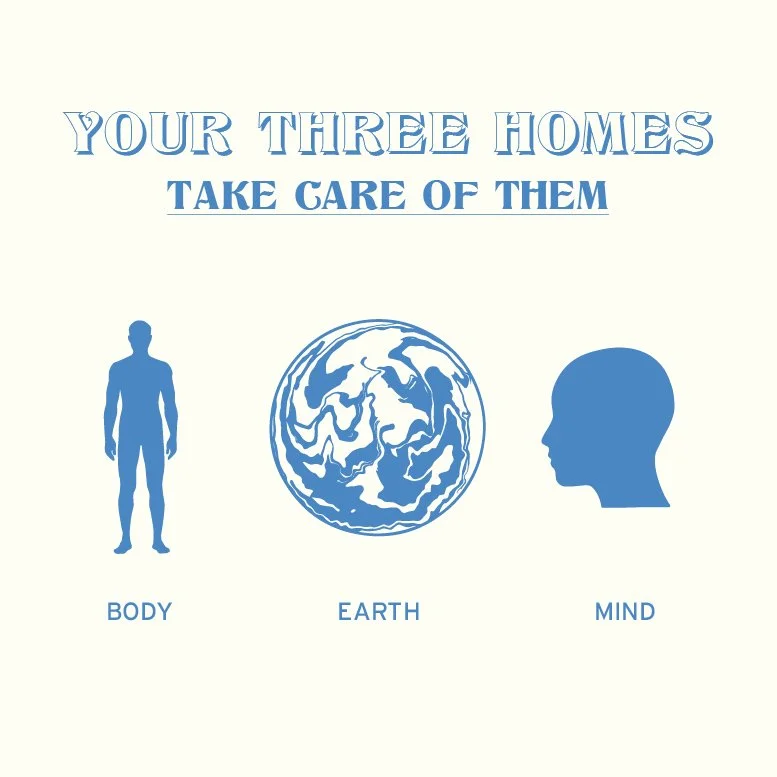
Your Wellbeing Is Connected
Mental health is only one part of the bigger picture. Our bodies, our minds, and the environments we live in all influence how we feel and how we move through the world.
Small acts of care, such as: resting when we need to, reaching out for support, spending time outside, nourishing ourselves, or creating healthier spaces around us can all make a difference.
Care doesn’t have to be complicated. Sometimes it starts with simply paying attention to what needs you.
Listen to your body when it asks you to slow down
•
Listen to your body when it asks you to slow down •
You Don’t Have to Go Through It Alone
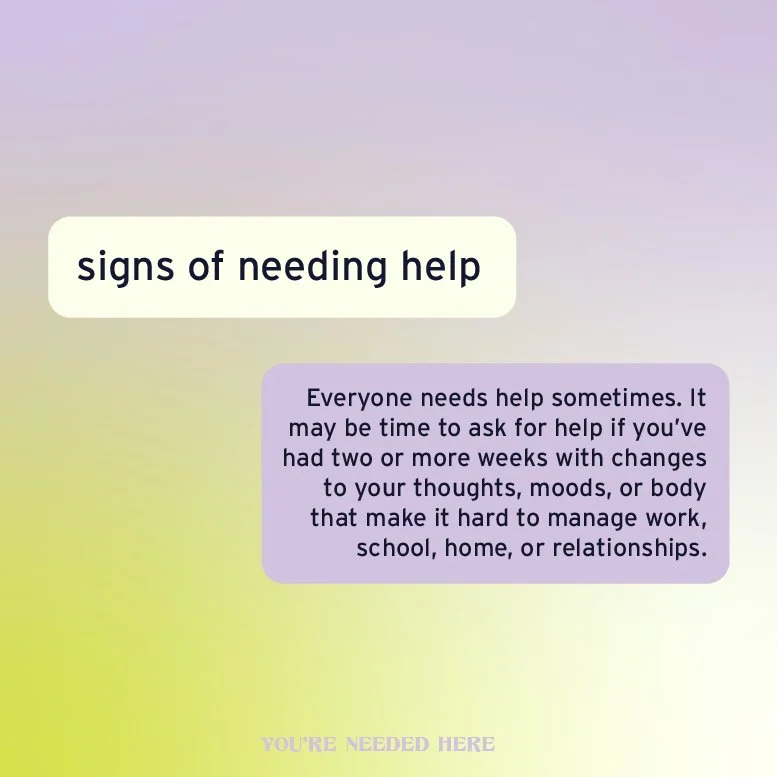
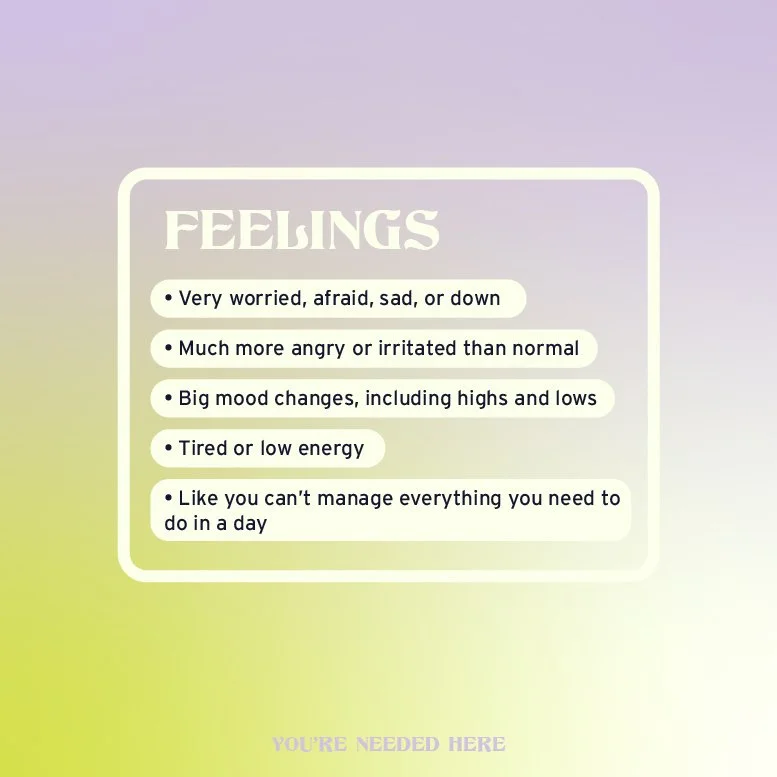
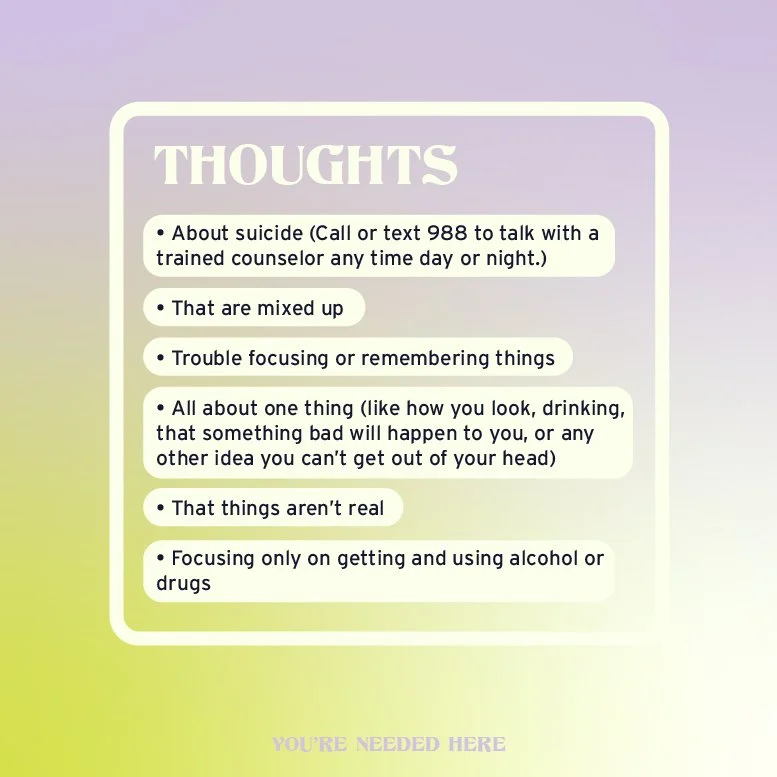
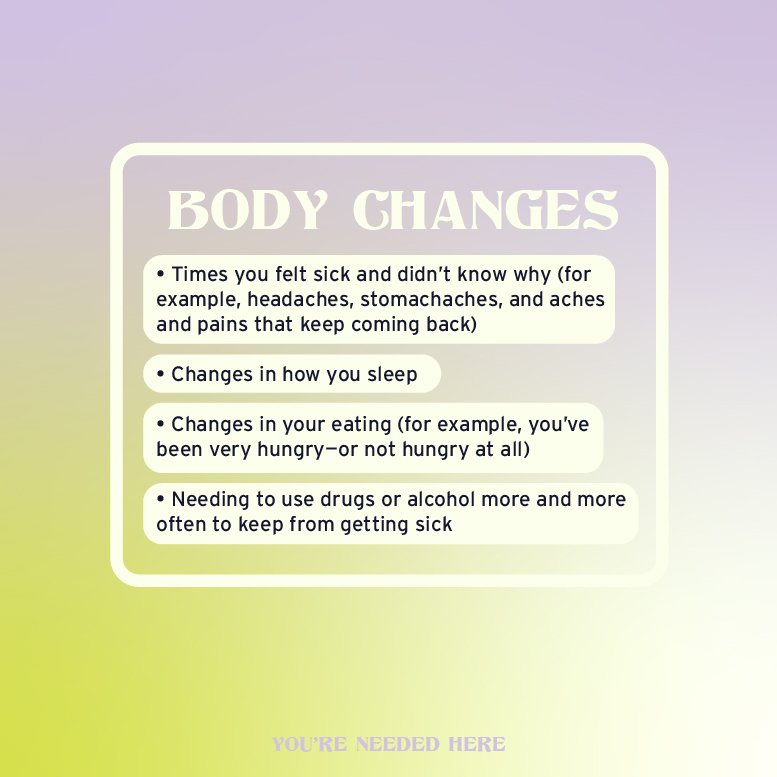
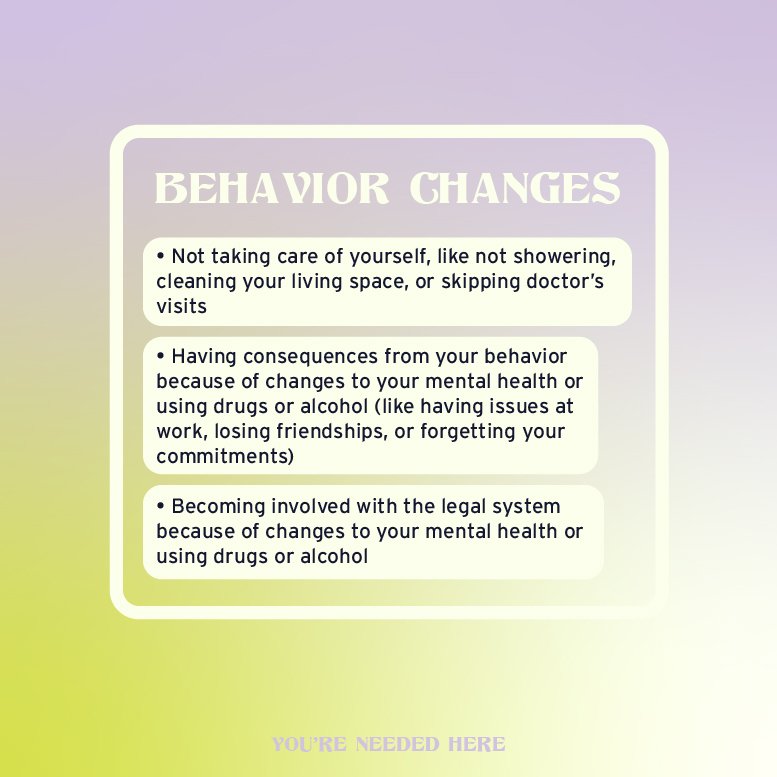
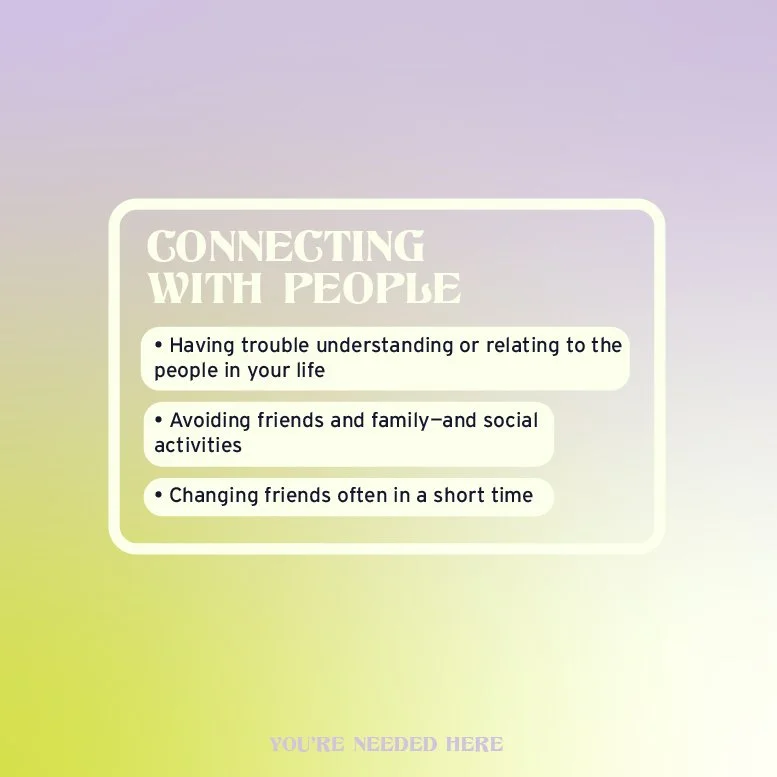
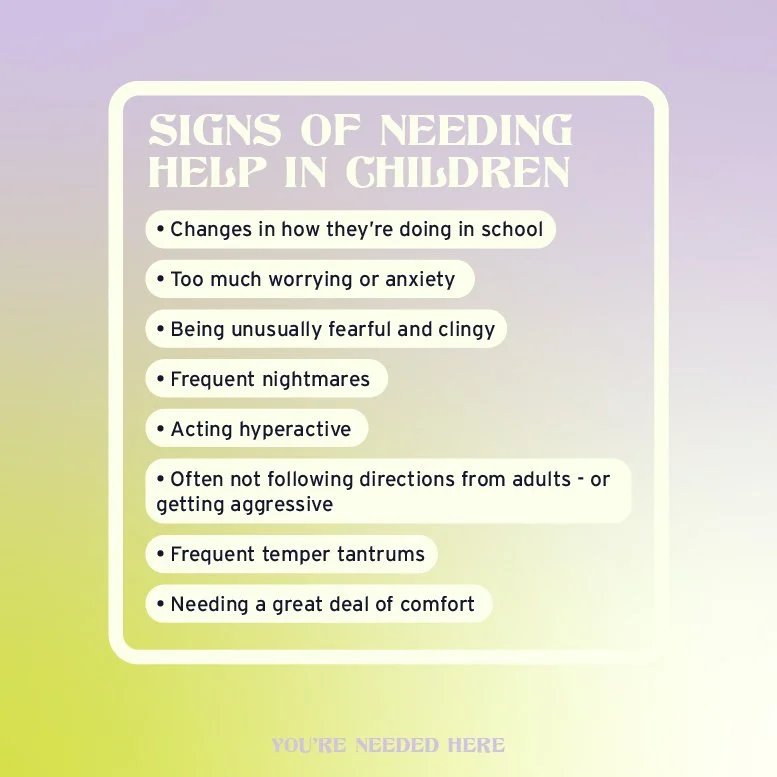
Mental health can affect all of us, and sometimes it can be difficult to recognize when we’re struggling or to know when it’s time to ask for help.
If you recognize yourself (or someone you care about) in any of these signs, know that you don’t have to figure everything out on your own.
You deserve support, understanding, and a safe place to talk about what you’re experiencing.
Reaching out doesn’t mean something is wrong with you; it means you’re taking care of yourself.
Whether you need a conversation, professional support, or simply someone willing to listen, help is available, and you are worth reaching out for.
You’re Needed Here.
Sometimes the strongest thing you can do is let someone in
•
Sometimes the strongest thing you can do is let someone in •

Reaching Out is a Strength
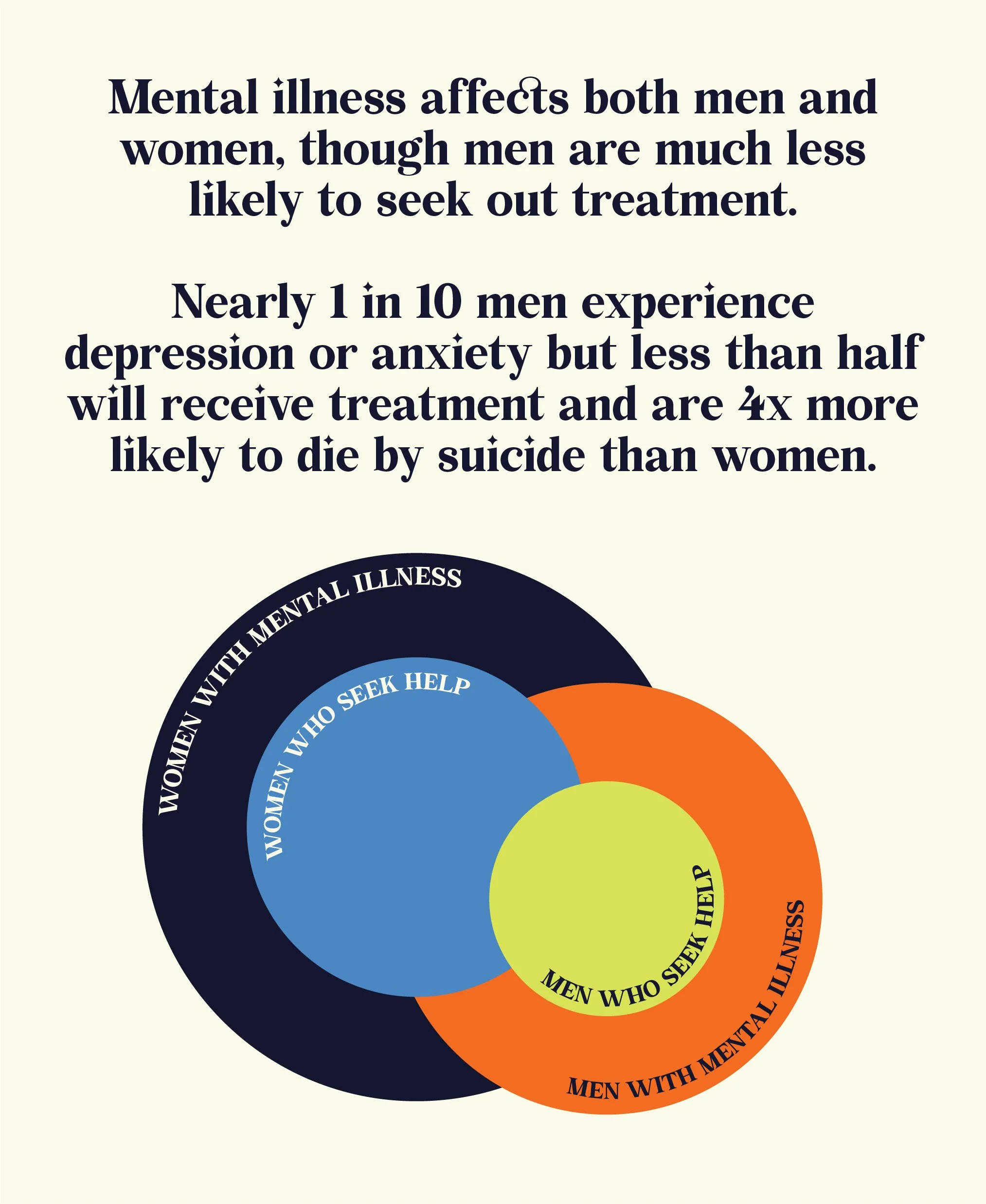
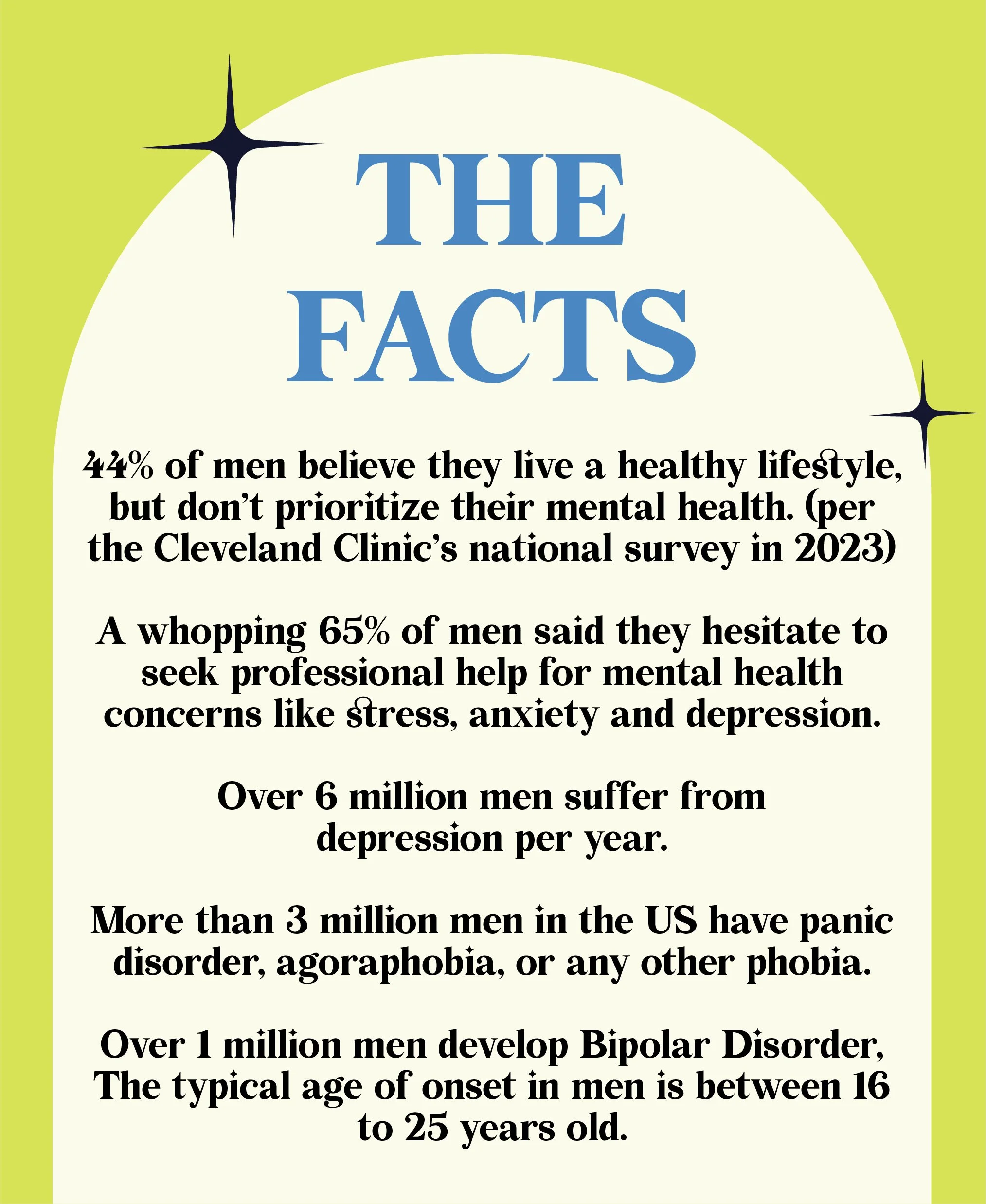
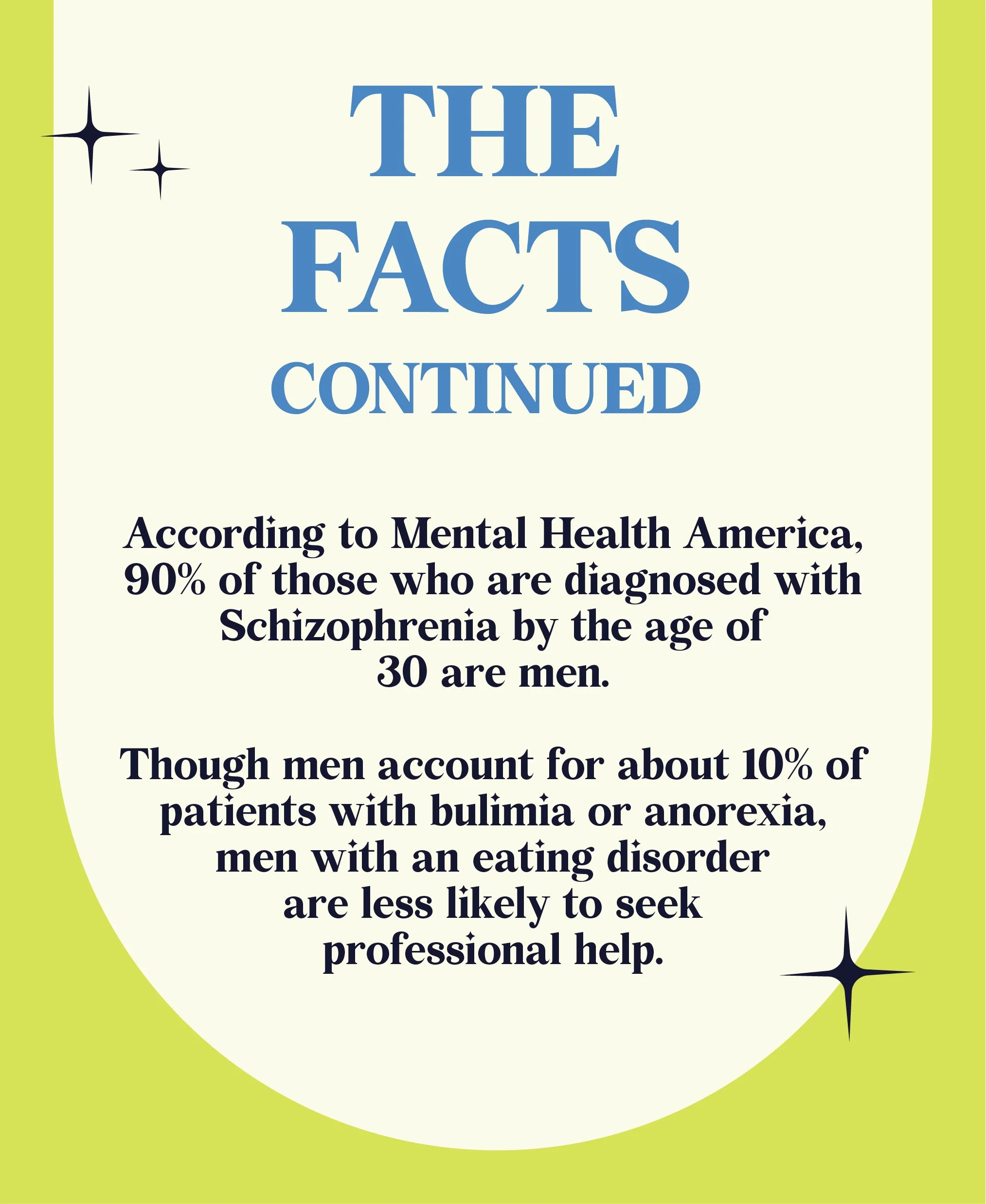
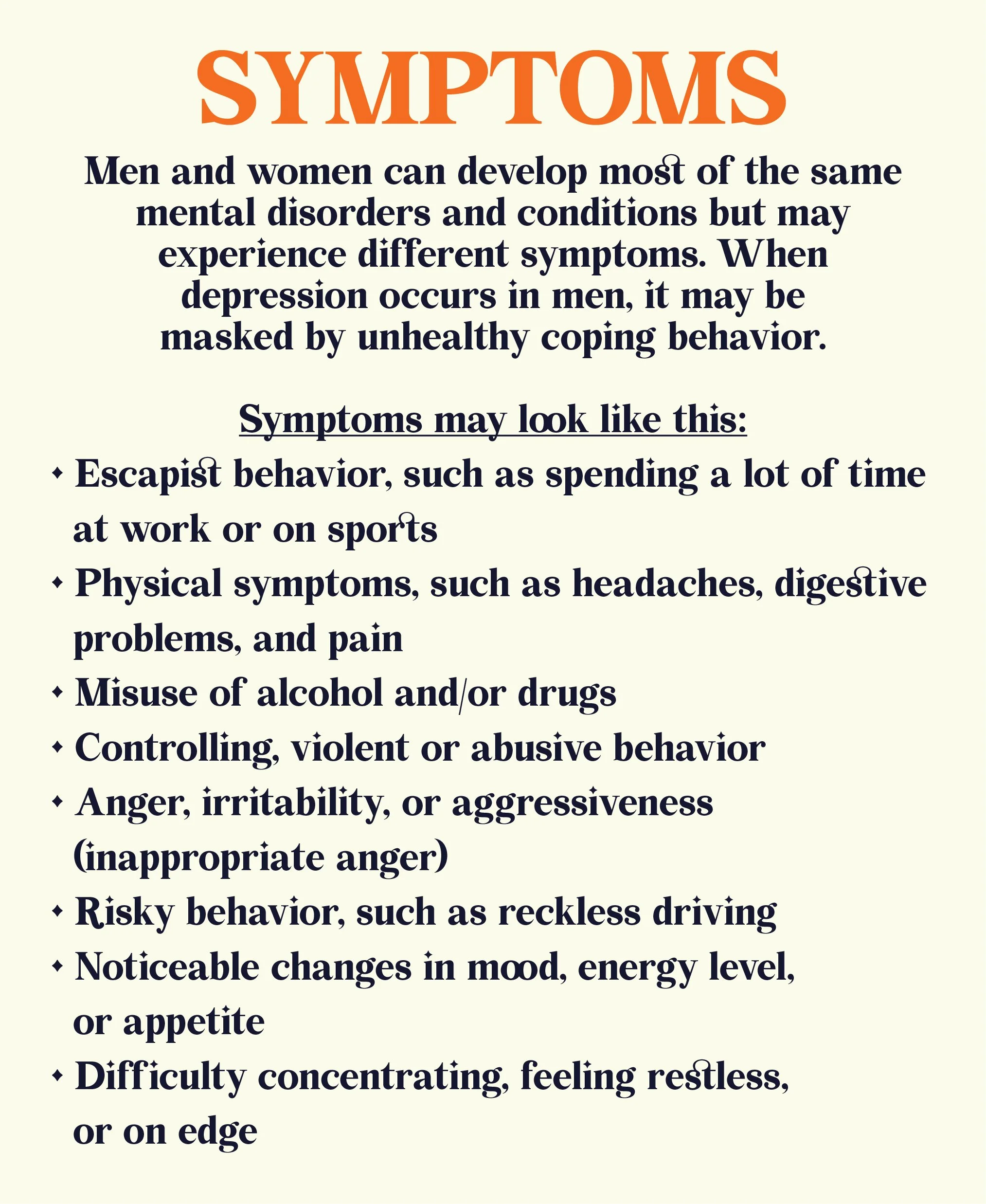
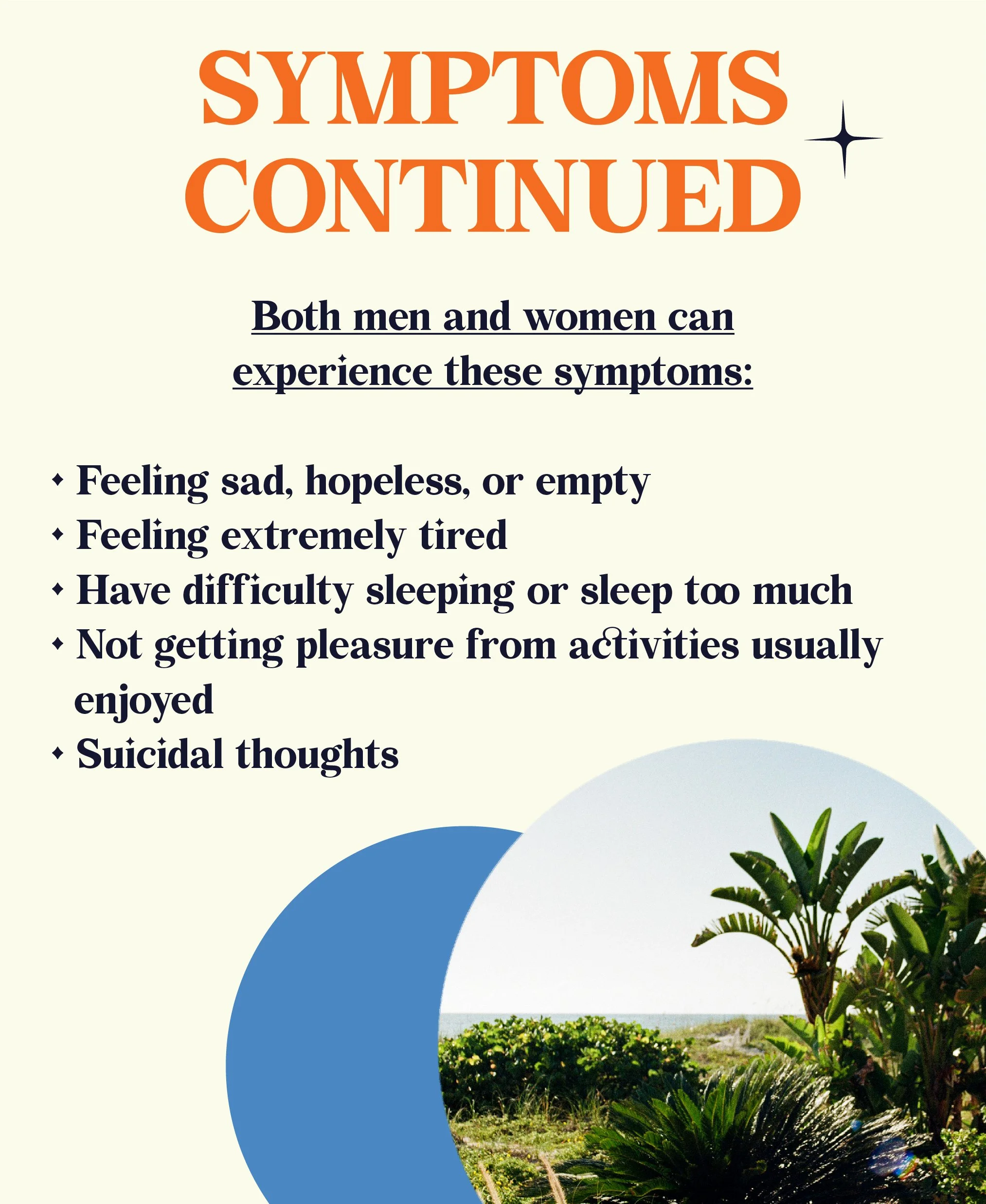
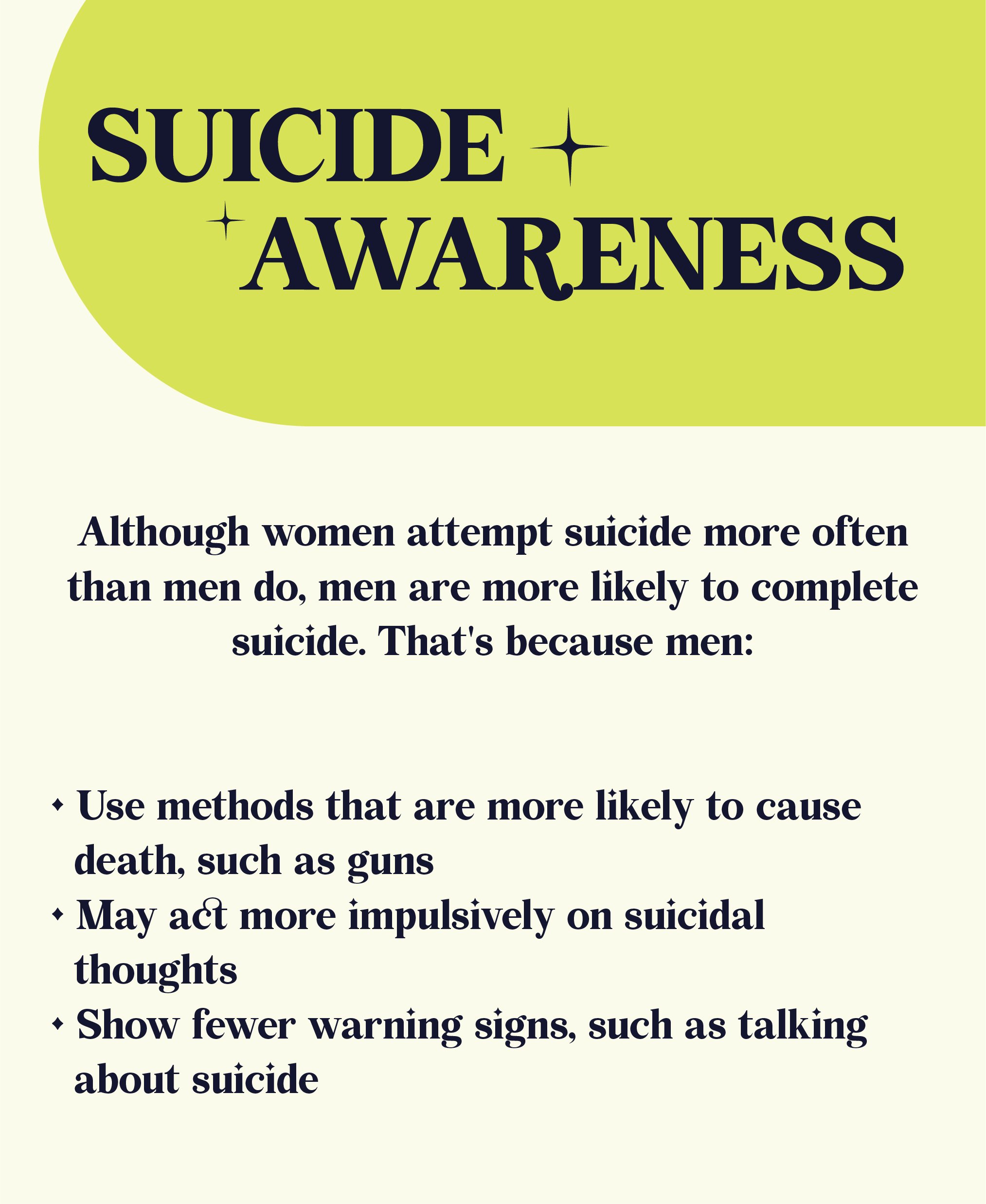
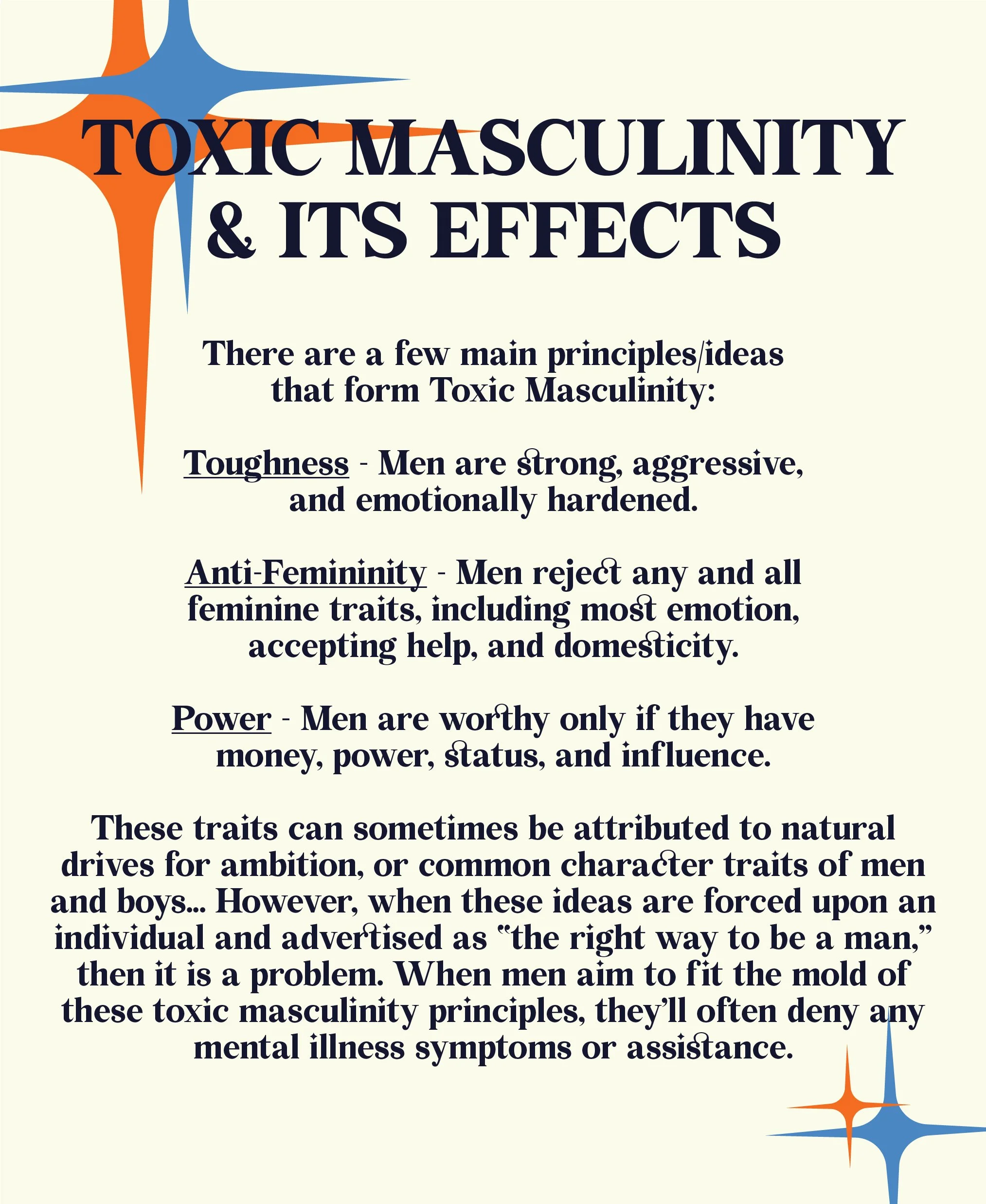
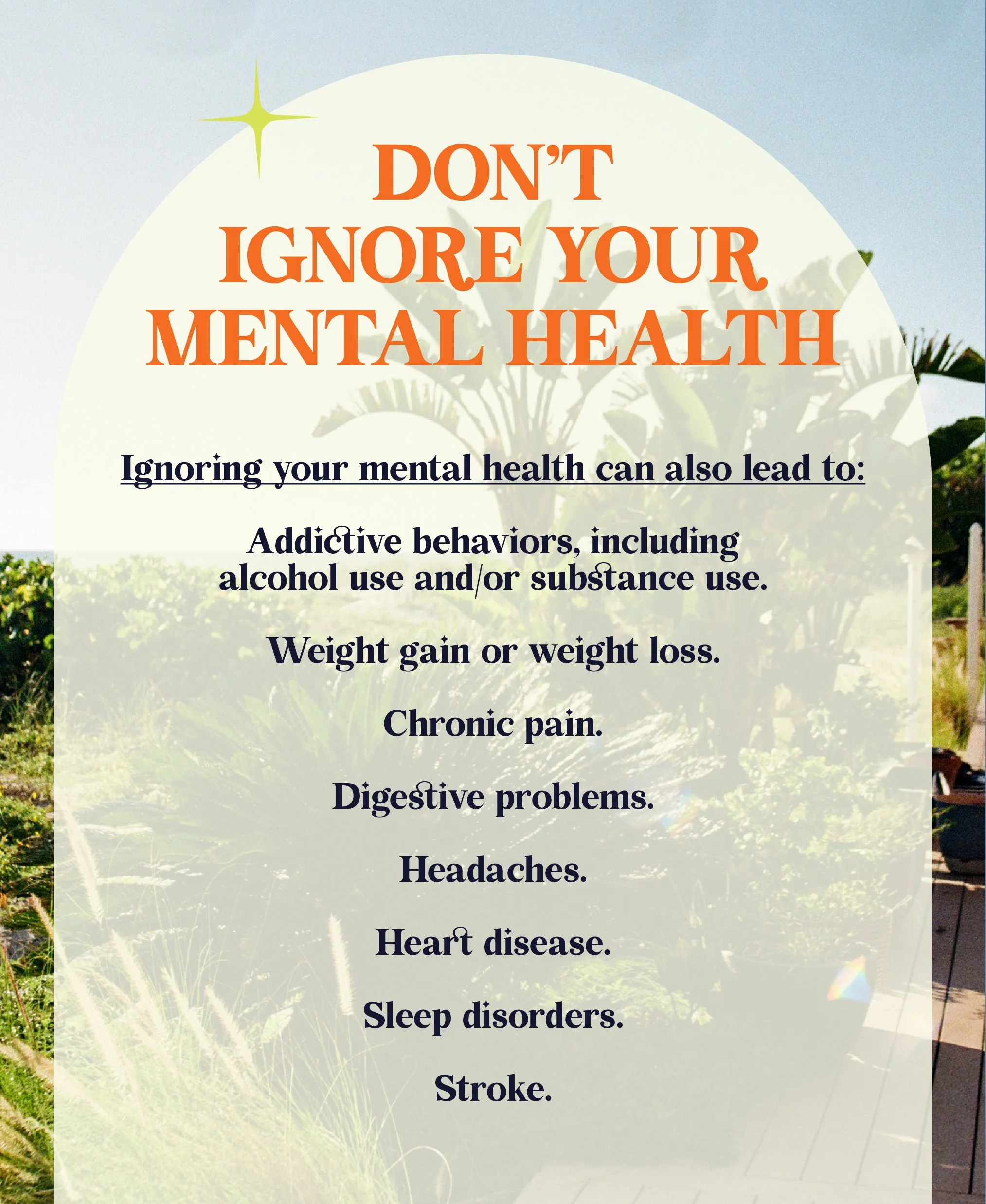
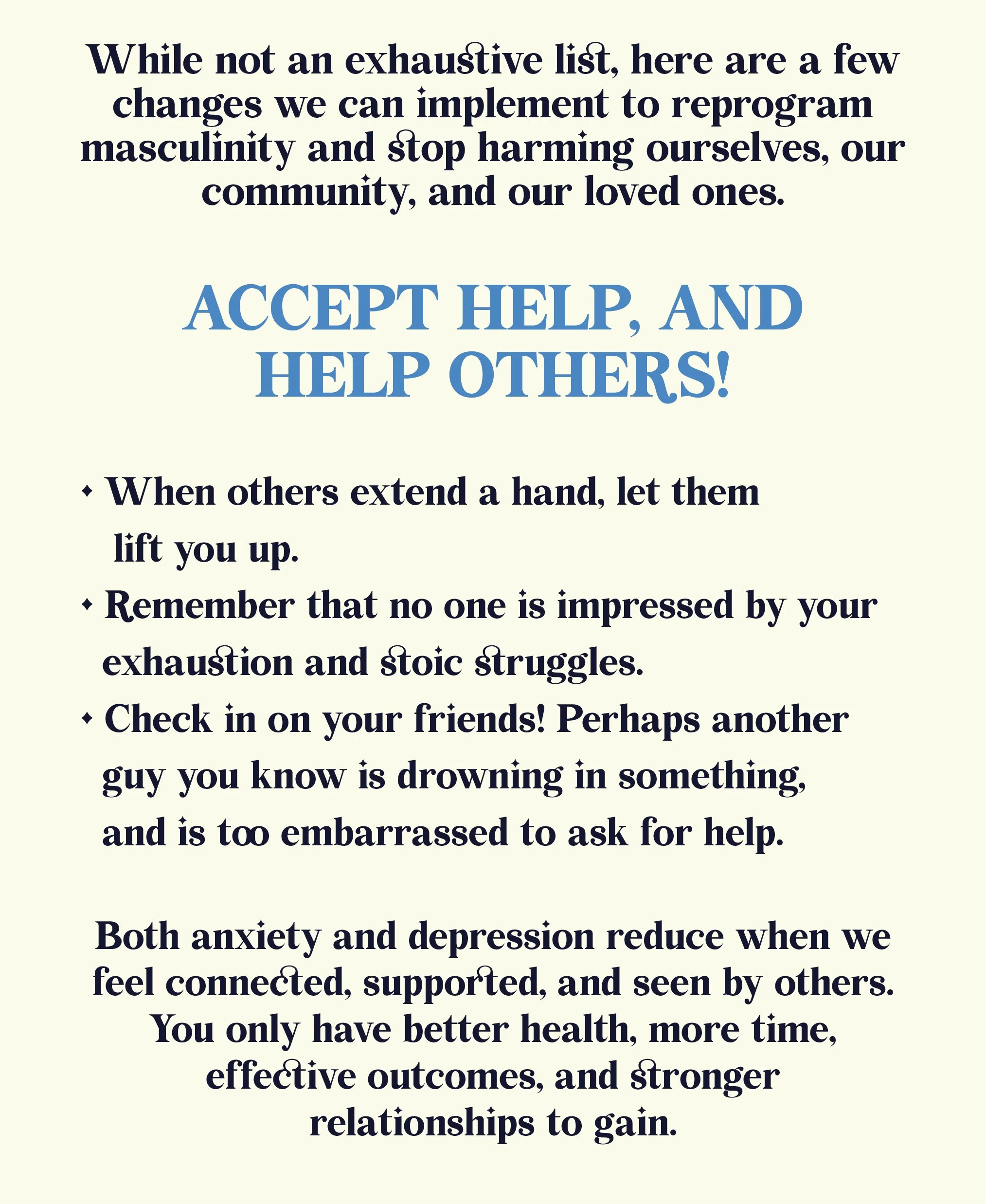
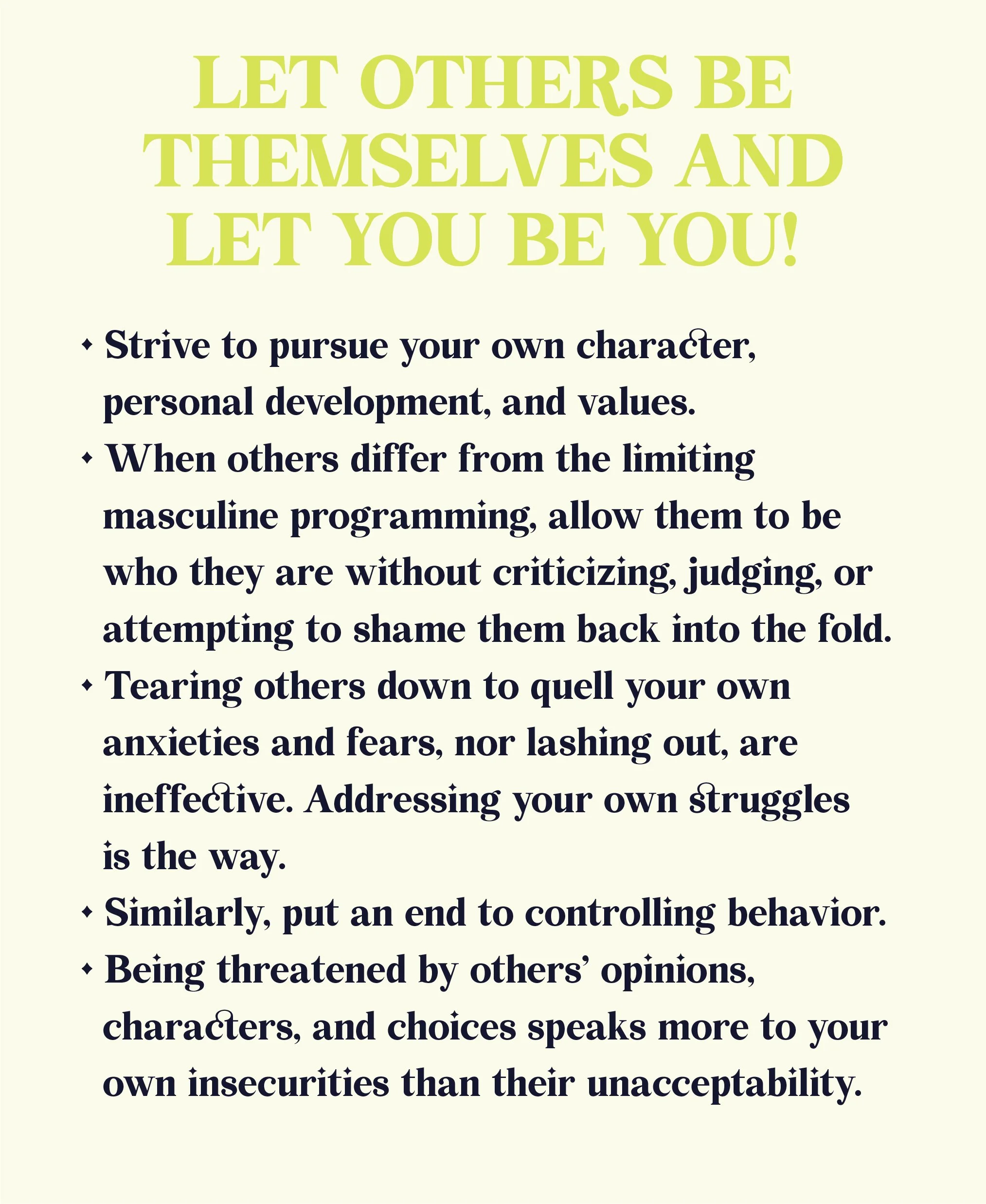
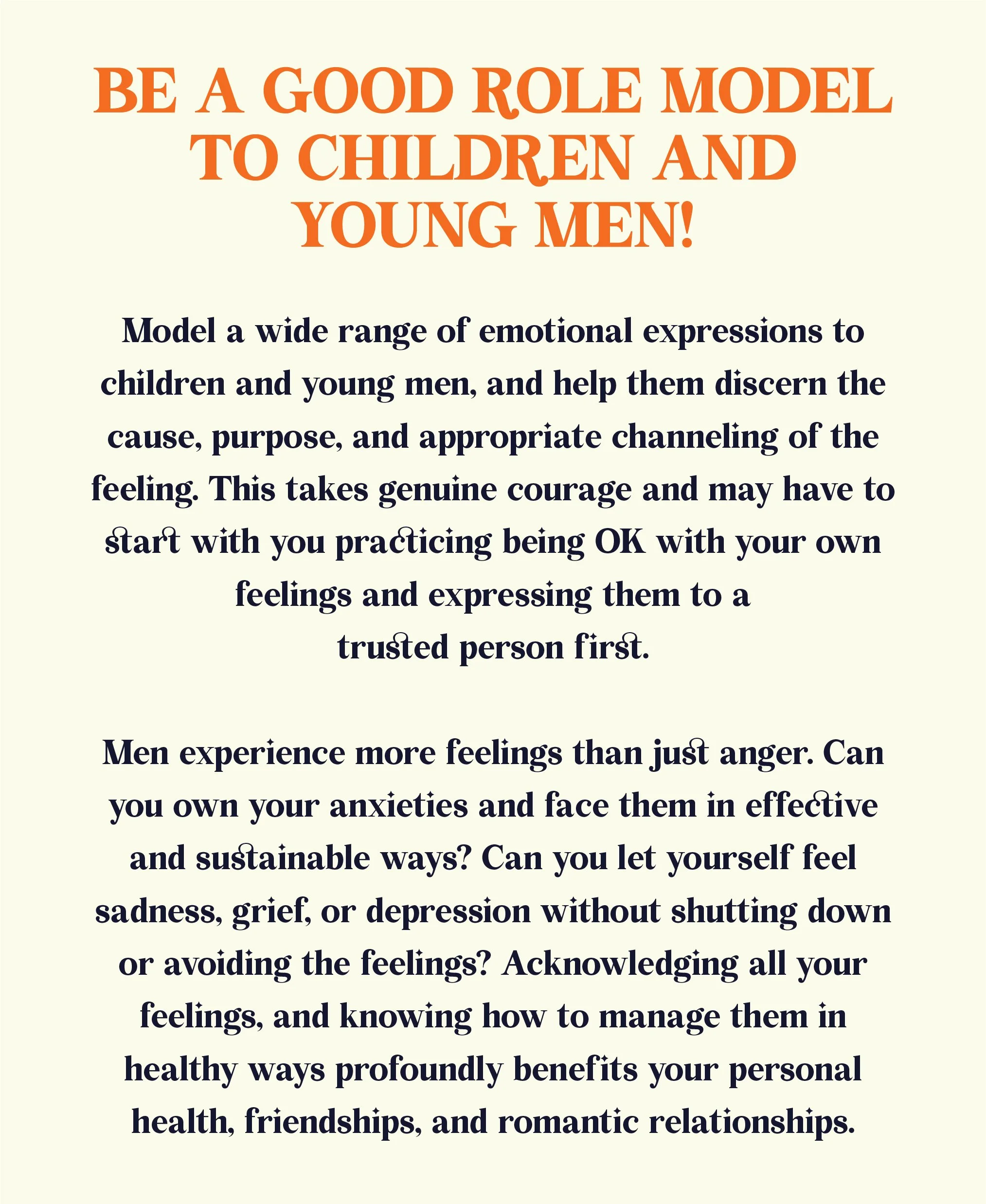
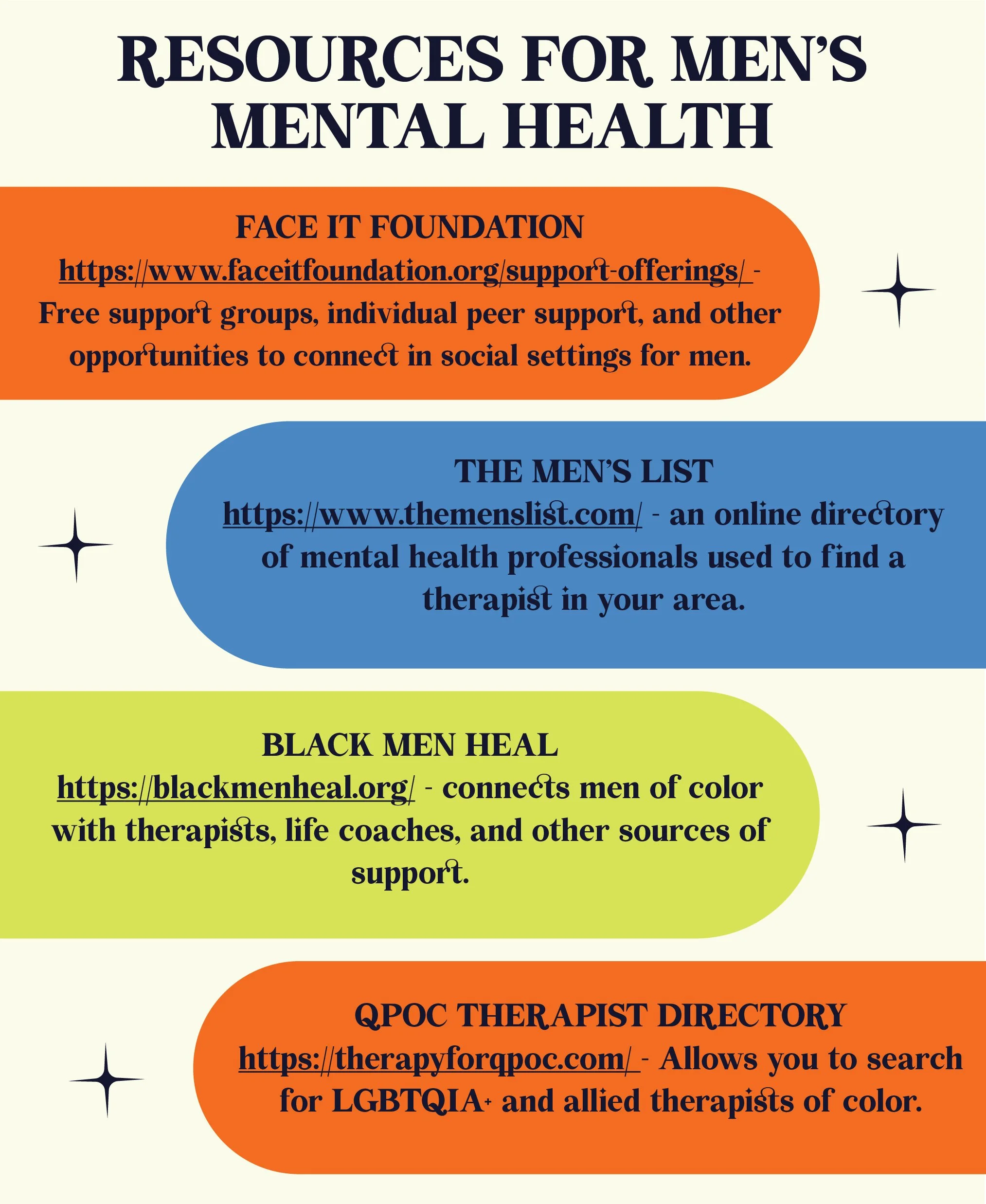
Men’s mental health is an important part of overall health, yet it is often overlooked, misunderstood, or left untreated. Men can experience depression, anxiety, bipolar disorder, eating disorders, and other mental health conditions, but social expectations around masculinity and self-reliance can sometimes make it harder to recognize symptoms or ask for help. Emotional distress may appear as irritability, anger, withdrawal, loss of interest in activities, changes in sleep or appetite, difficulty concentrating, exhaustion, increased substance use, physical complaints, or risky behavior.
Pay attention when these changes are new, persistent, or begin affecting work, relationships, daily routines, or quality of life.
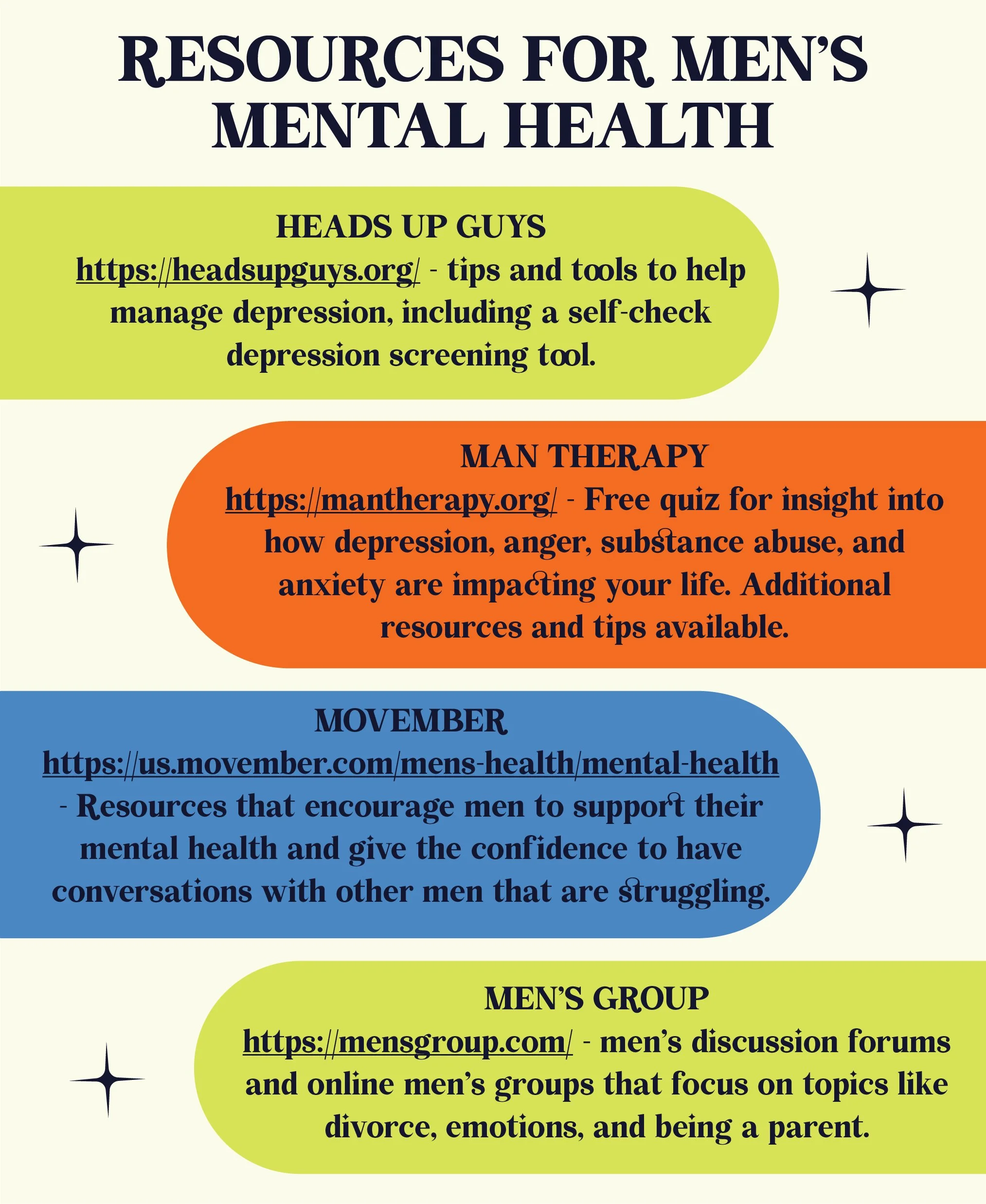
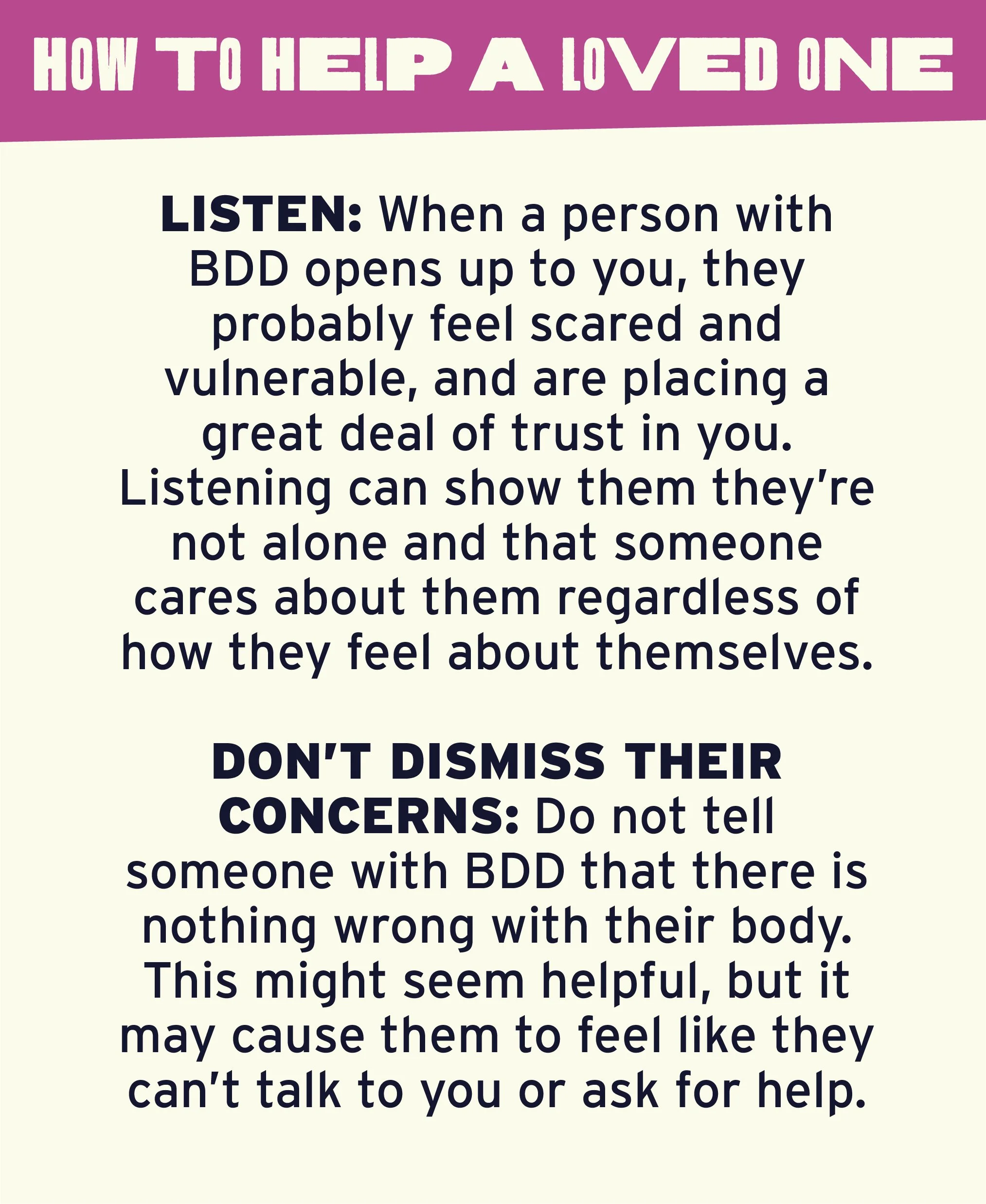
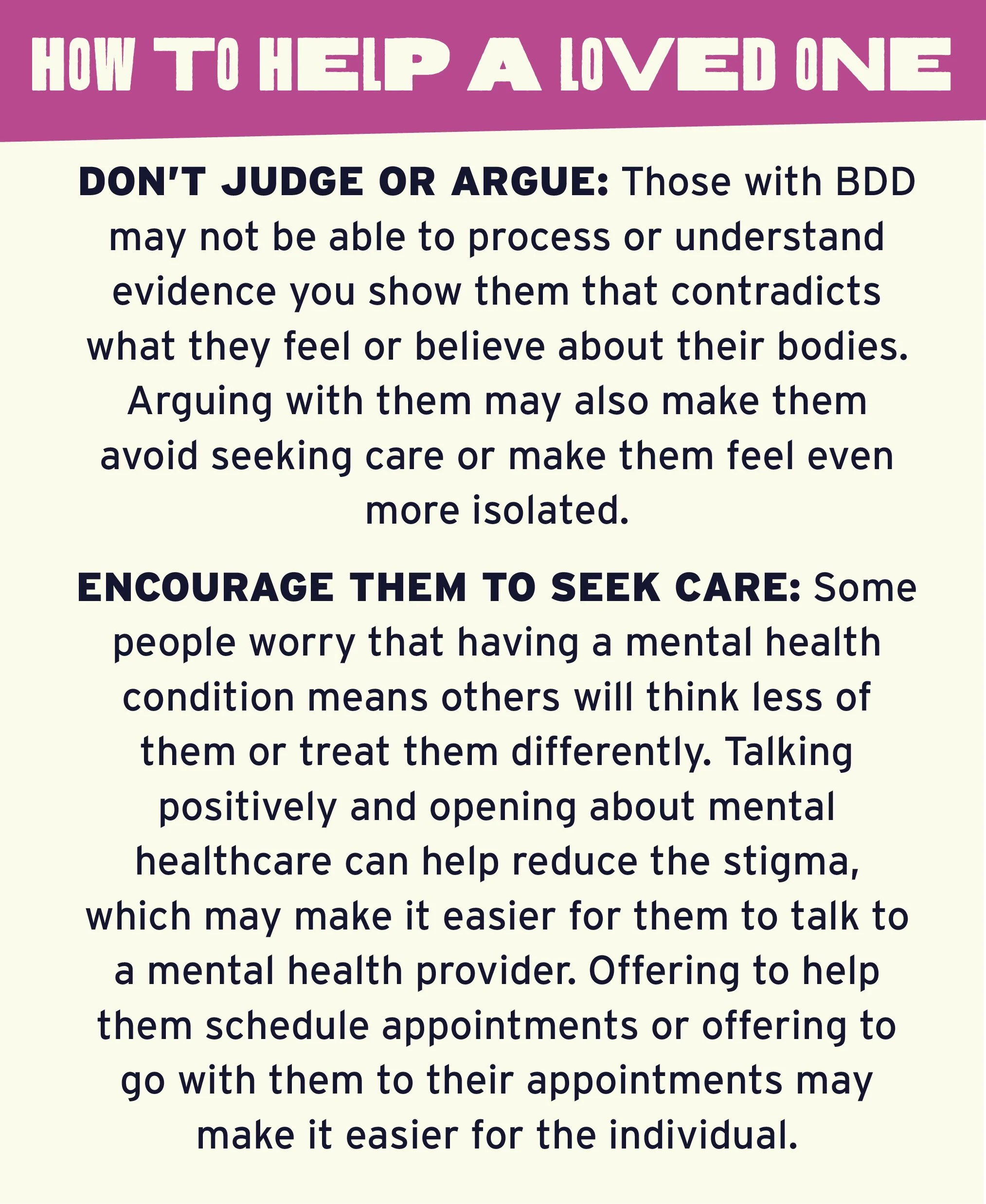
Support can start with a conversation. If you notice changes in yourself or someone you care about, check in, listen without judgment, and encourage professional support when needed. A primary care provider, therapist, counselor, or mental health professional can help identify what may be happening and determine appropriate next steps.
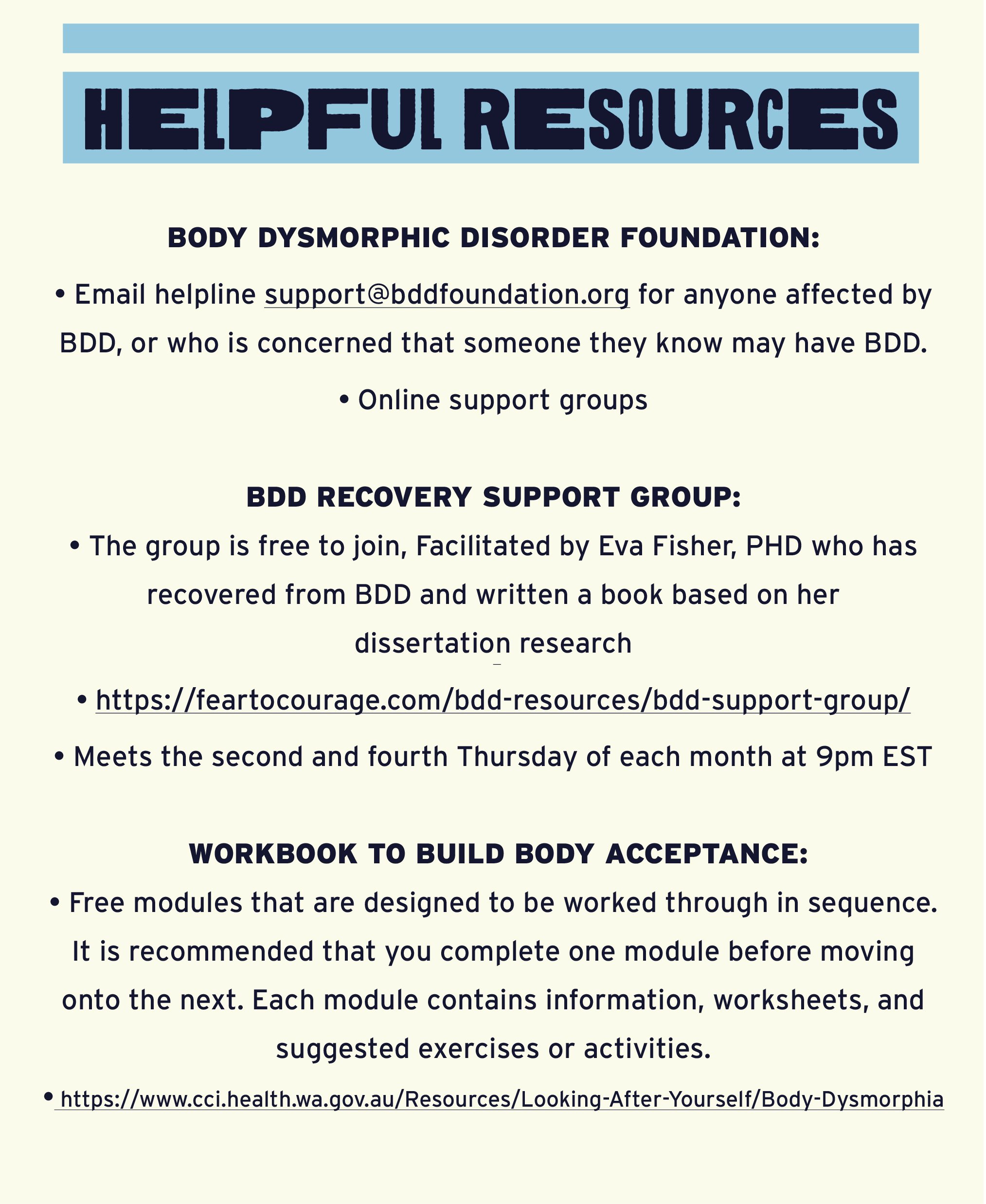
Support can also come from trusted friends, family members, community organizations, peer-support groups, and mental health resources. If someone is experiencing thoughts of suicide or is in emotional crisis, call or text 988 for the Suicide & Crisis Lifeline. Asking for help is not a weakness, it is part of taking care of your mental health.
You are stronger than you give yourself credit for
•
You are stronger than you give yourself credit for •
Understanding BDD can help you recognize when it’s time to seek support
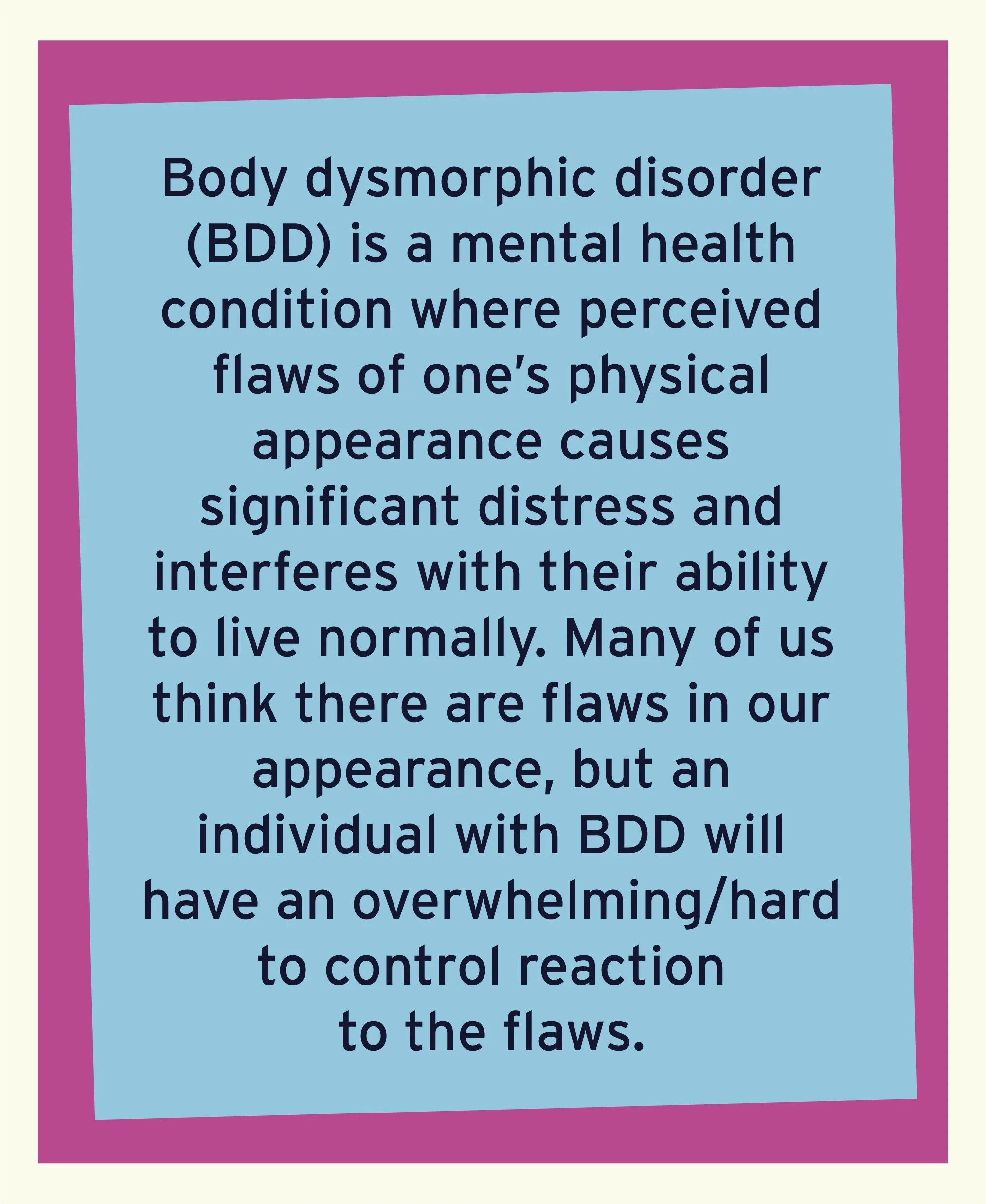
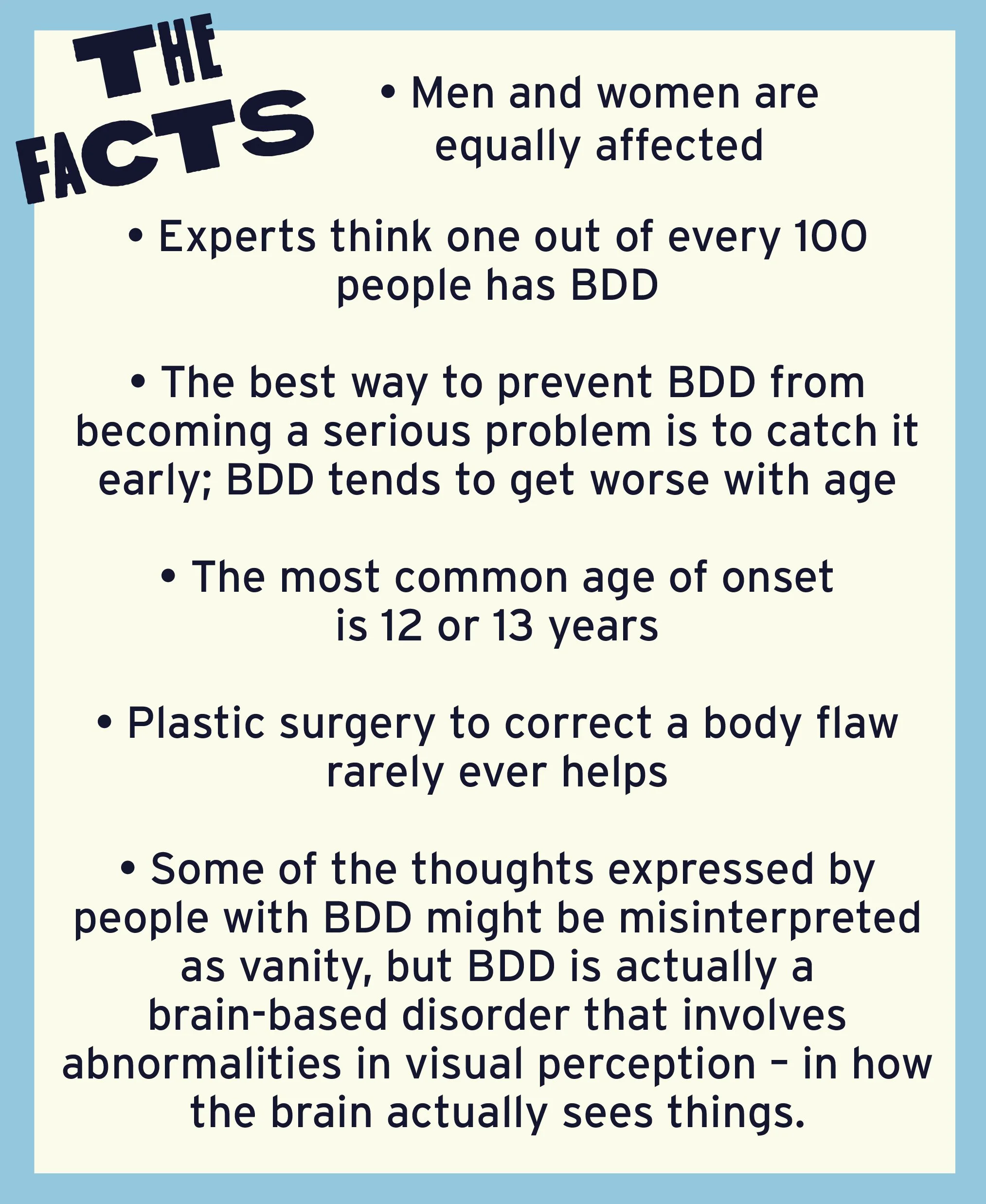
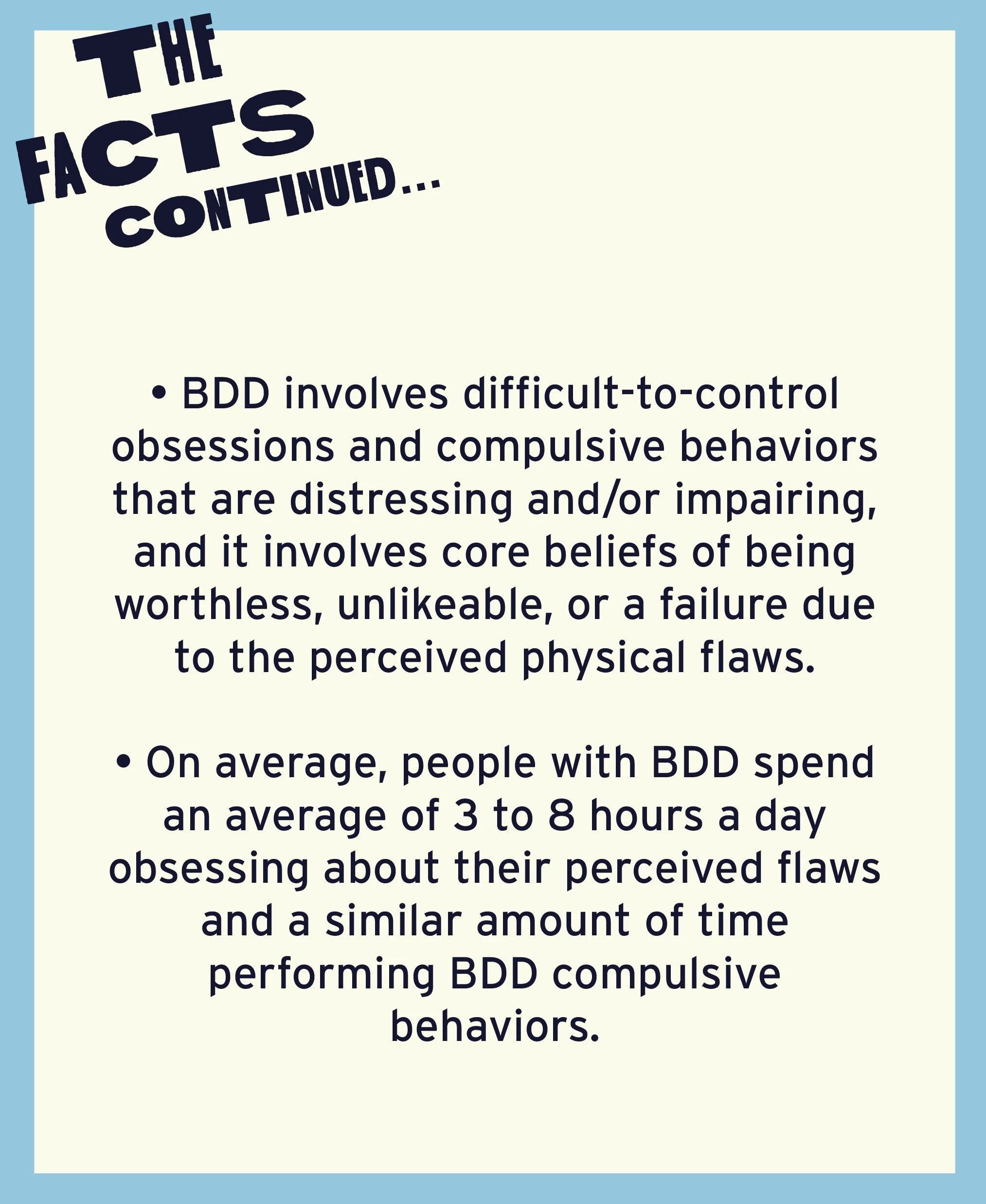
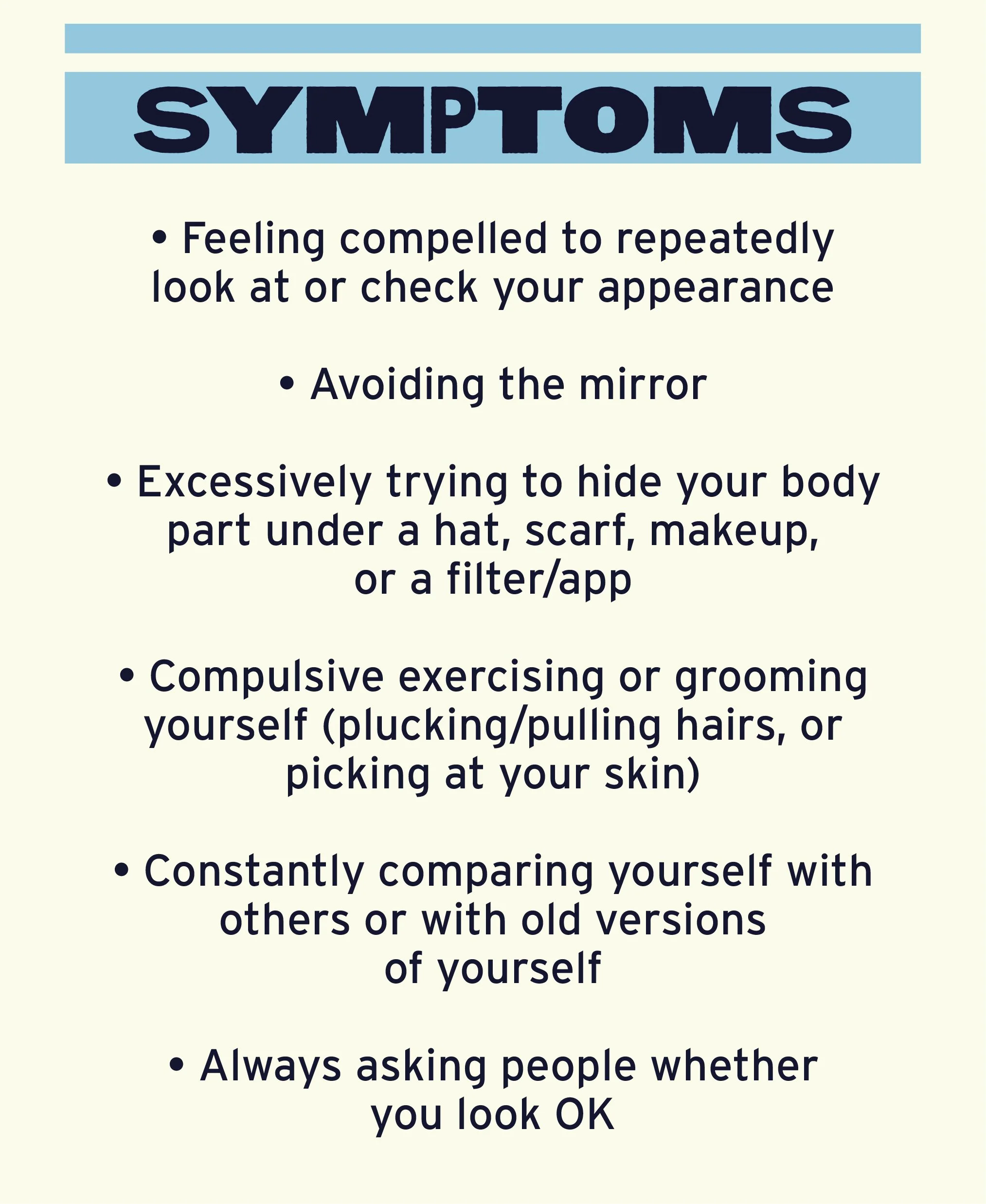
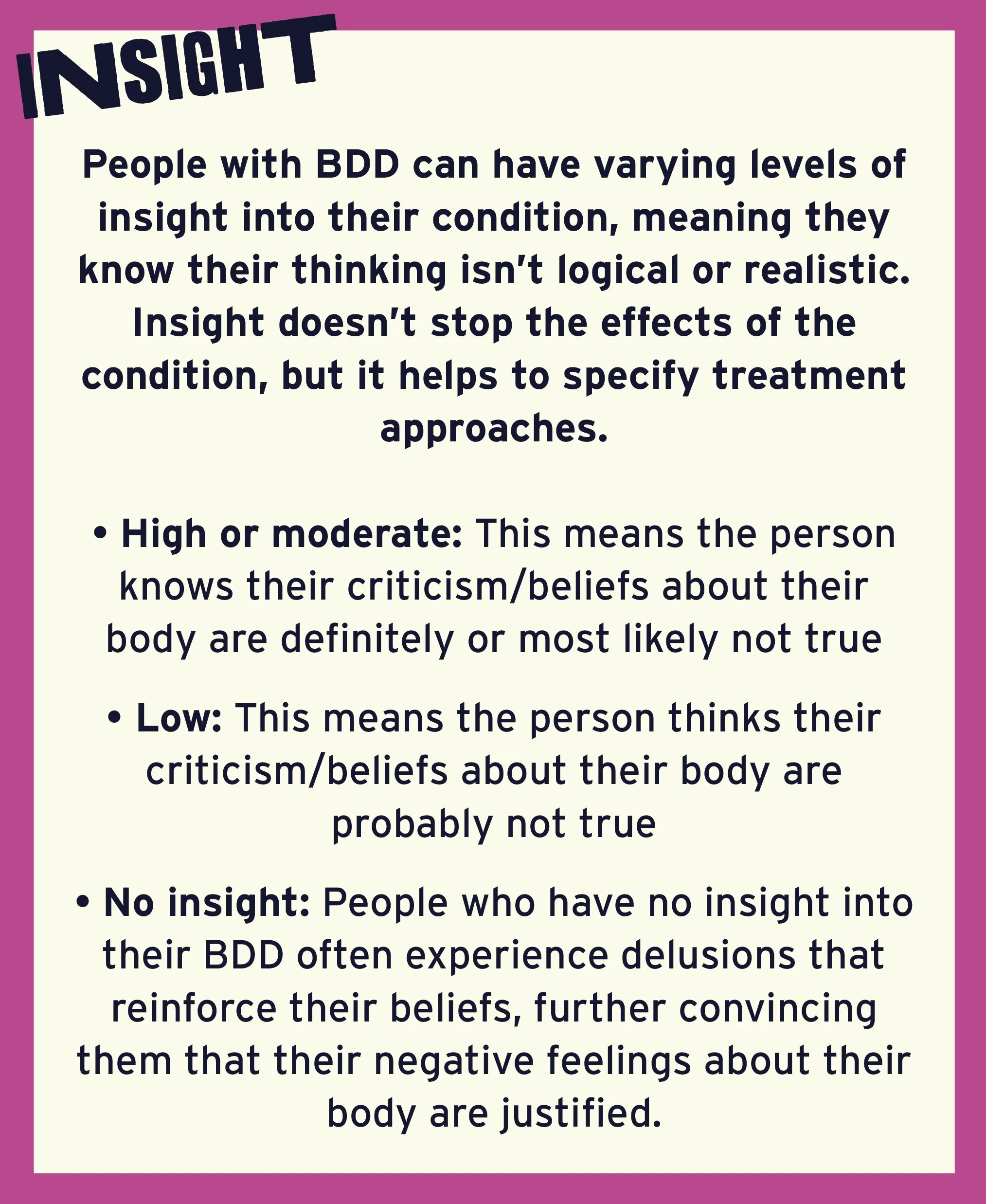
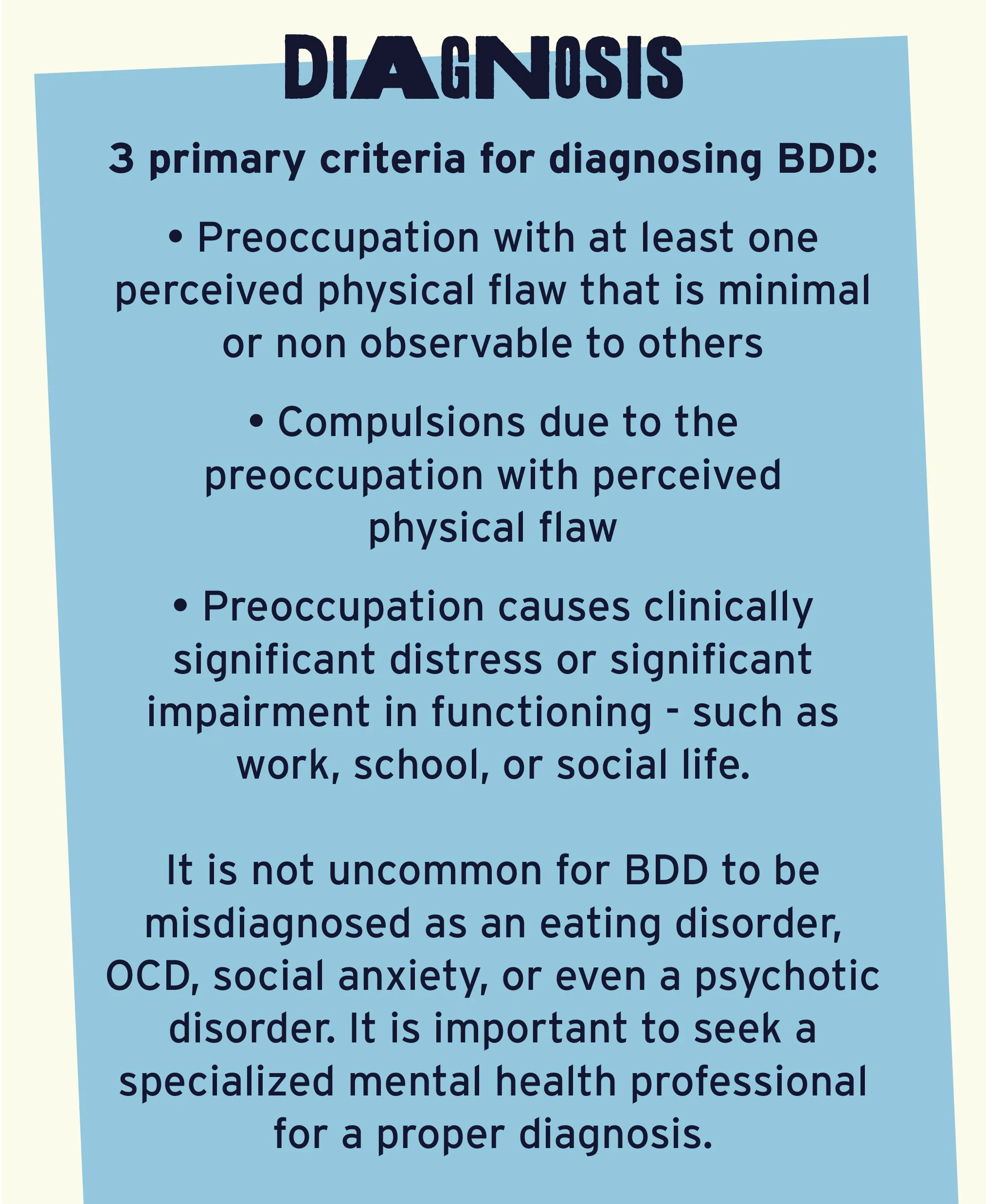
Body dysmorphic disorder (BDD) is a mental health condition involving intense, difficult-to-control concerns about perceived flaws in appearance. These flaws may be minor or unnoticeable to others, but can cause significant distress and interfere with daily life. BDD often begins during adolescence and affects people of all genders.
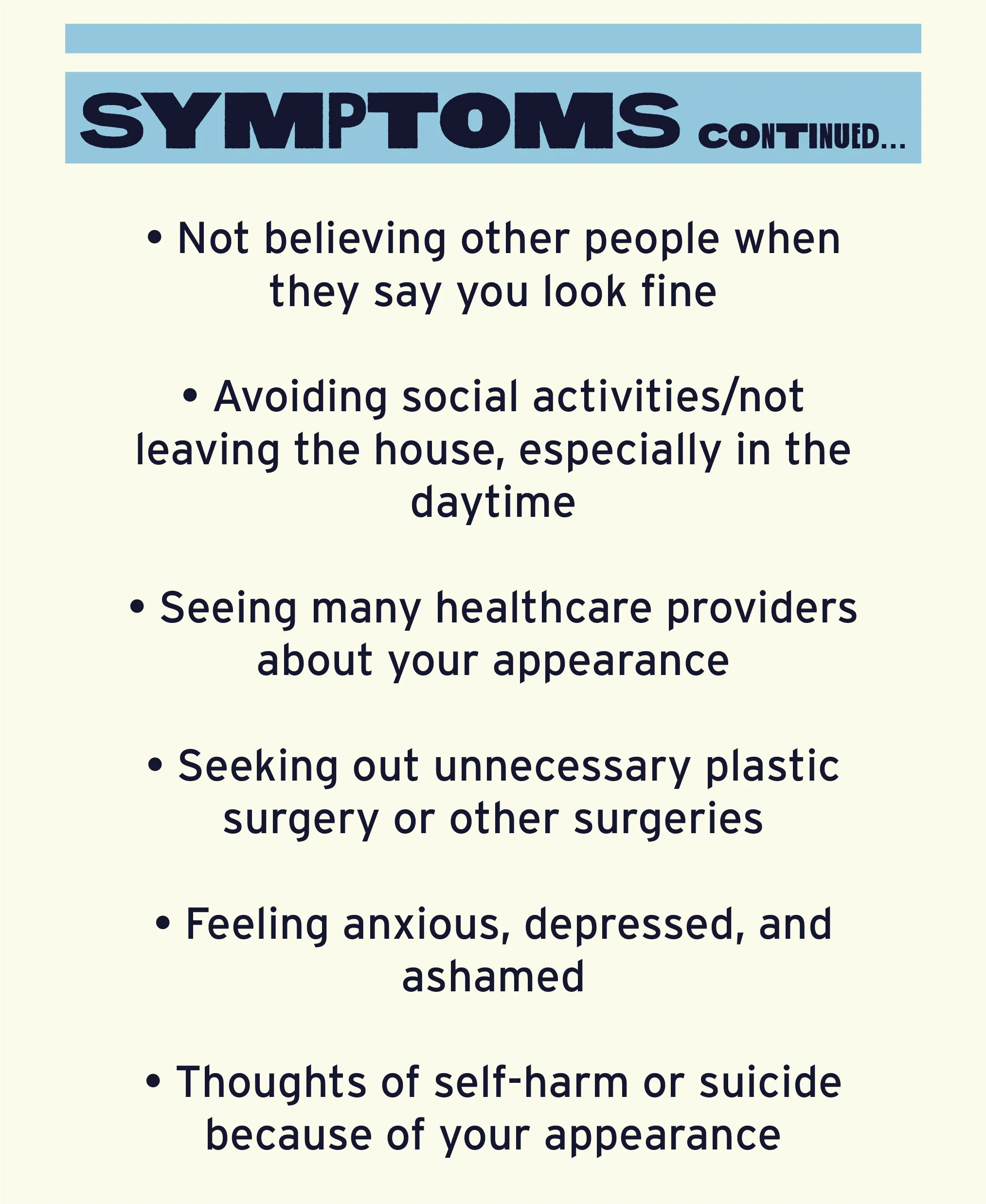
Common signs include constantly checking or avoiding mirrors, excessive grooming or exercising, comparing yourself to others, seeking reassurance, hiding perceived flaws, avoiding social situations, or repeatedly seeking cosmetic procedures. People with BDD may spend hours each day obsessing over their appearance.
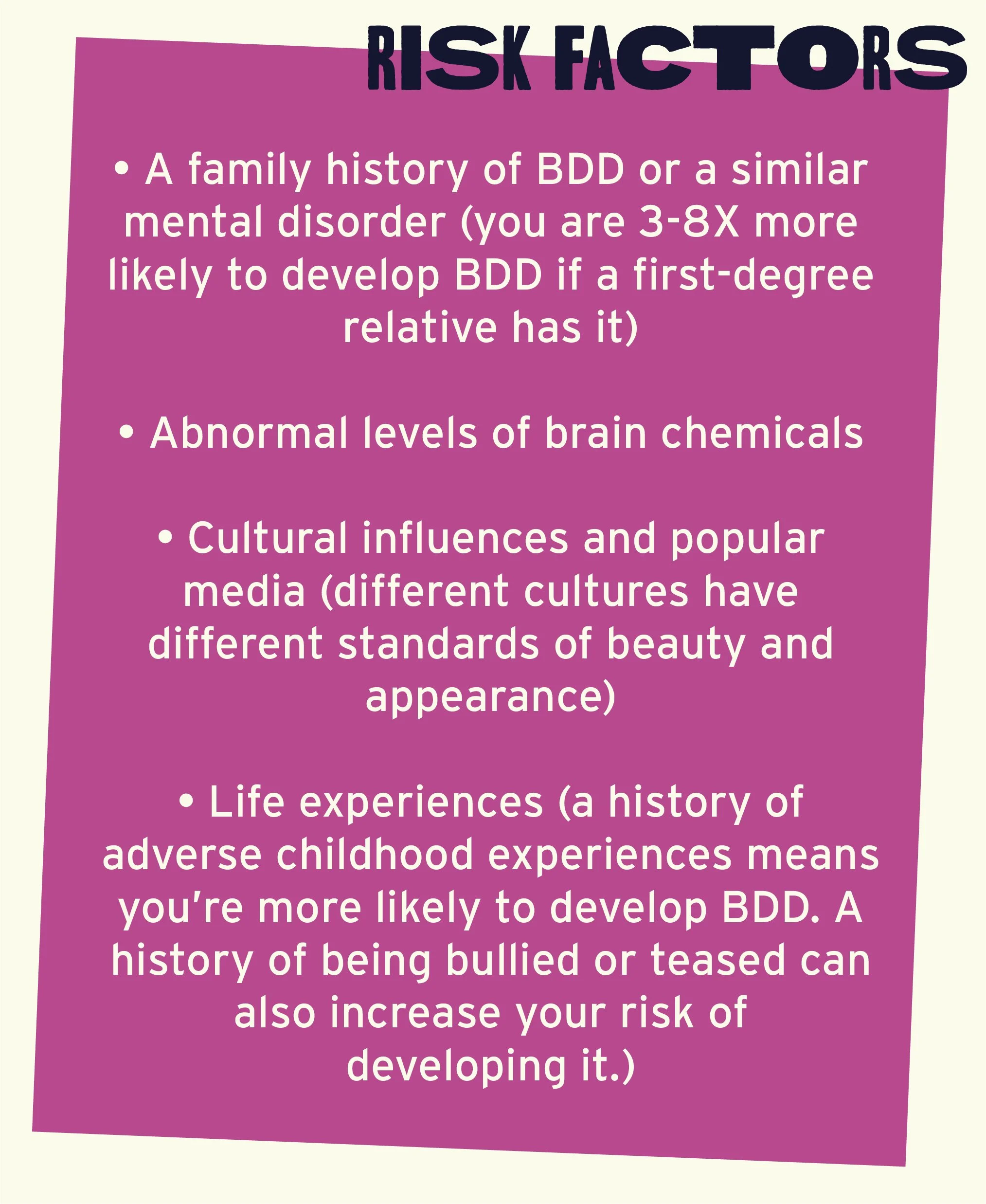
BDD is more than insecurity or vanity, it involves changes in how a person perceives their appearance and can occur alongside anxiety, depression, OCD, or eating disorders. Risk factors include family history, bullying or difficult life experiences, and cultural pressures surrounding appearance.
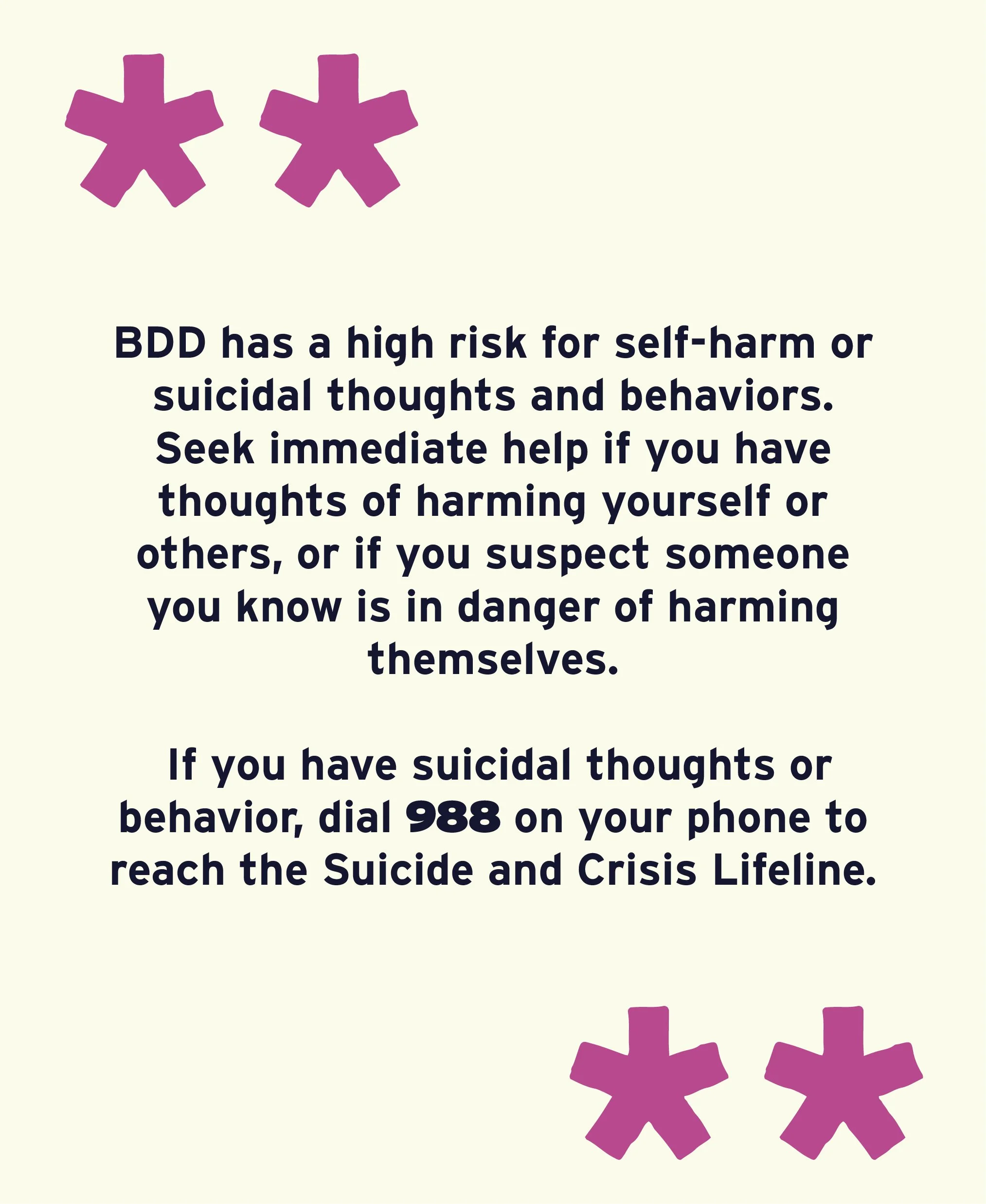
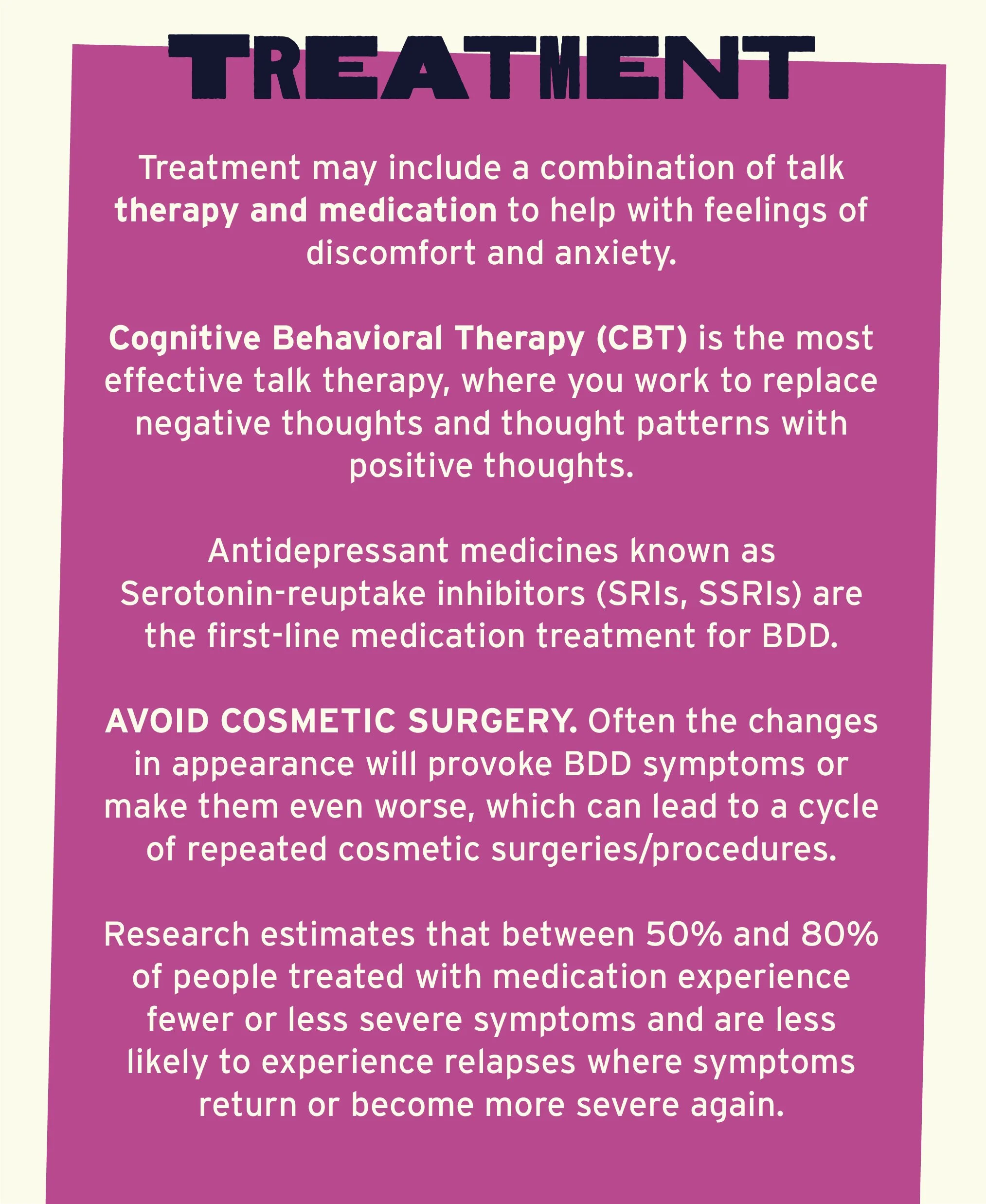
BDD is treatable. Cognitive behavioral therapy (CBT) and certain medications can help reduce obsessive thoughts and compulsive behaviors. Early support is important, especially because BDD is associated with an increased risk of self-harm and suicidal thoughts. If you or someone you know may be struggling, reaching out to a qualified mental health professional can be an important first step.
You are capable of rebuilding, beginning again, and growing
•
You are capable of rebuilding, beginning again, and growing •
Make A Difference
You may look at the world around you and wonder whether your voice can really make a difference. It can. And you are needed here. Change doesn't always begin with a major movement, it can start with one person showing up, speaking up, or choosing to invest in their community.
You don't have to do it alone, and you don't have to know everything to get involved.
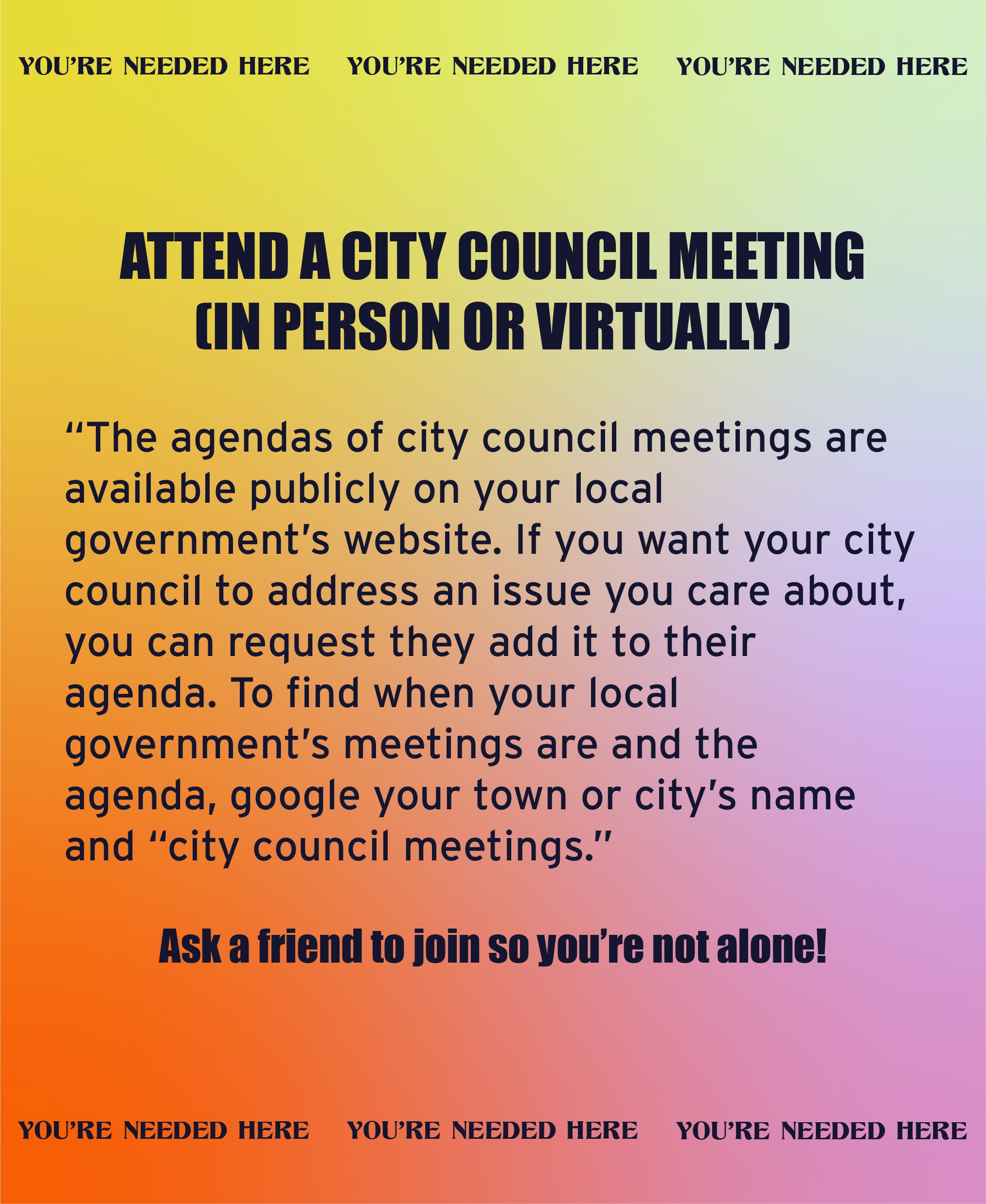
One way to make a difference is by attending a city council meeting, either in person or virtually. Meeting dates and agendas are often available on your local government's website, where you can also learn how to participate in public comment or share concerns about issues affecting your community. If attending feels intimidating, ask a friend to come with you. Showing up is a meaningful first step.
You can also join a local board or commission. Many communities have boards and commissions that advise local government on issues such as housing, public safety, transportation, parks, and economic development. Search "[your city or county] boards and commissions" to discover opportunities to get involved. If you're curious about elections, consider volunteering with a local campaign to learn more about how local government and elections work while contributing your time and skills to your community.
You don't have to change the world overnight. Start with one meeting, one conversation, one volunteer opportunity, or one small act of showing up. Every time you participate, you become part of something bigger. Your presence can help shape your community and its future, even when you don't see the impact right away.
You don't have to do everything. You just have to start somewhere. You’re Needed Here.
You have something meaningful to contribute to your community
•
You have something meaningful to contribute to your community •
You can be vulnerable without being weak
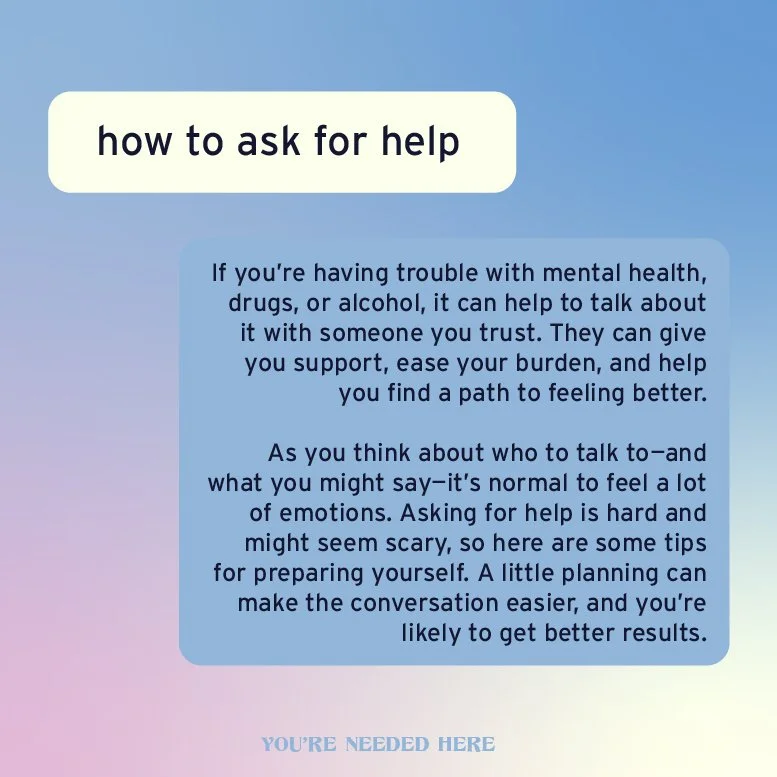
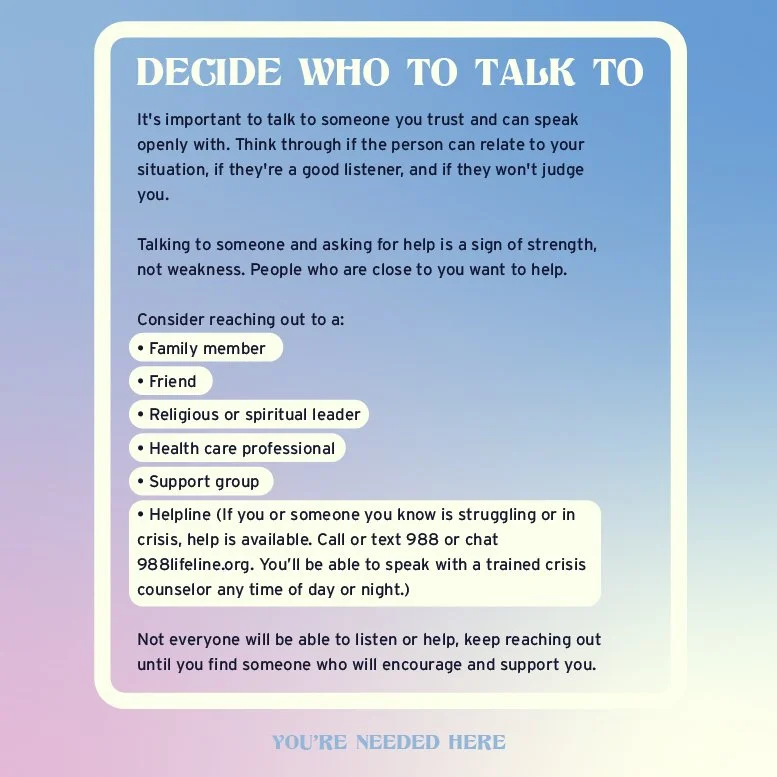
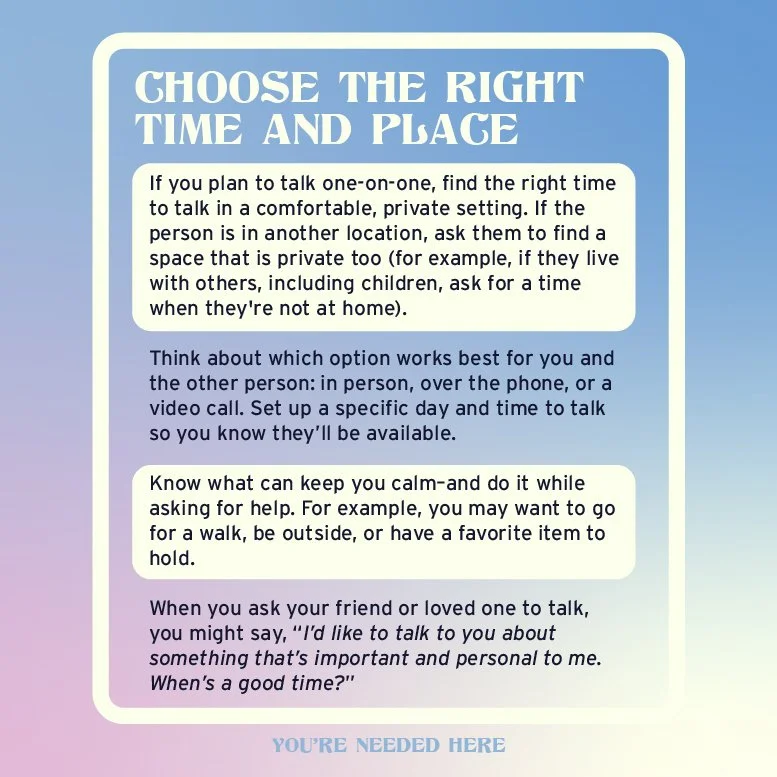
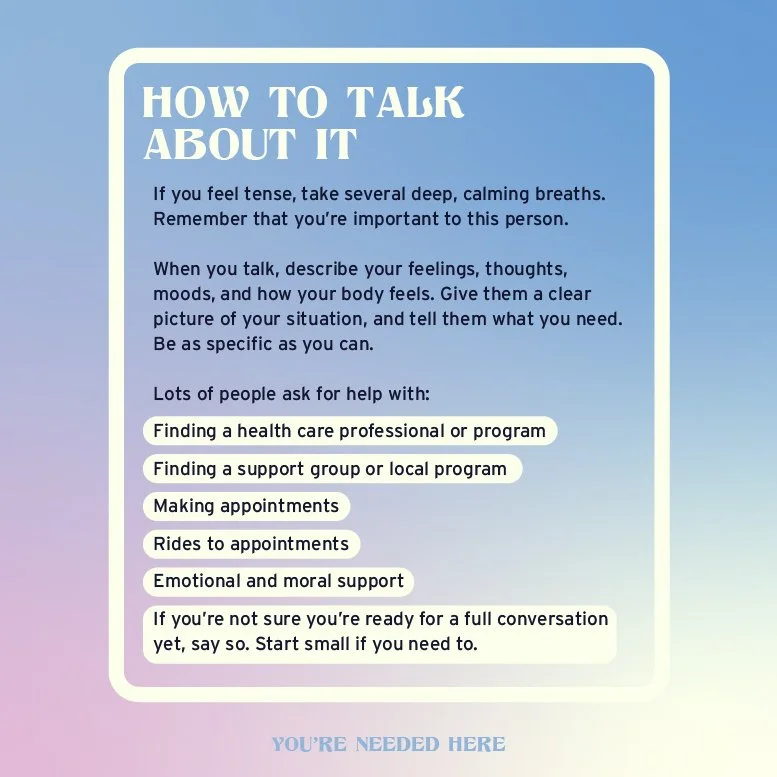
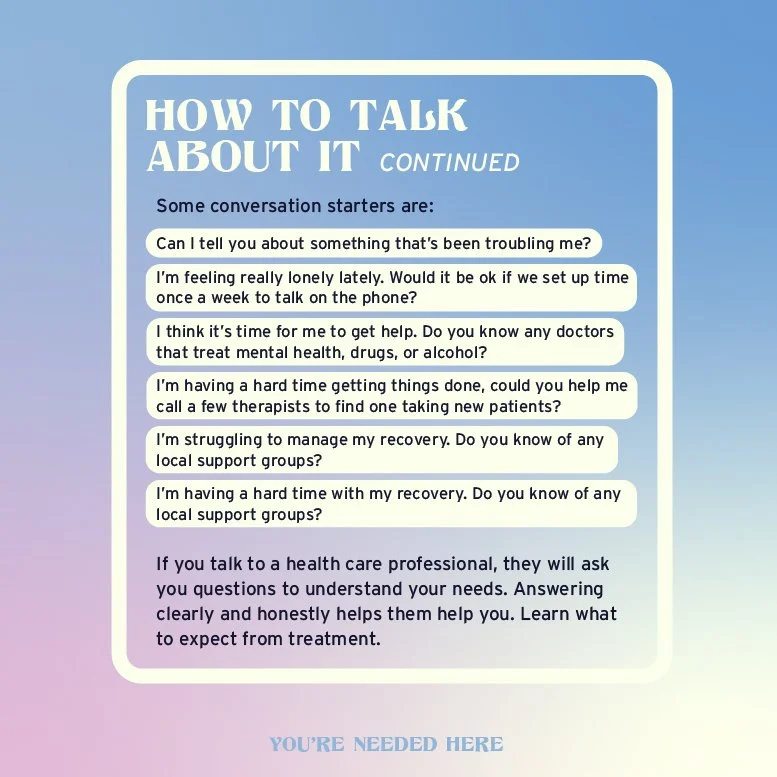
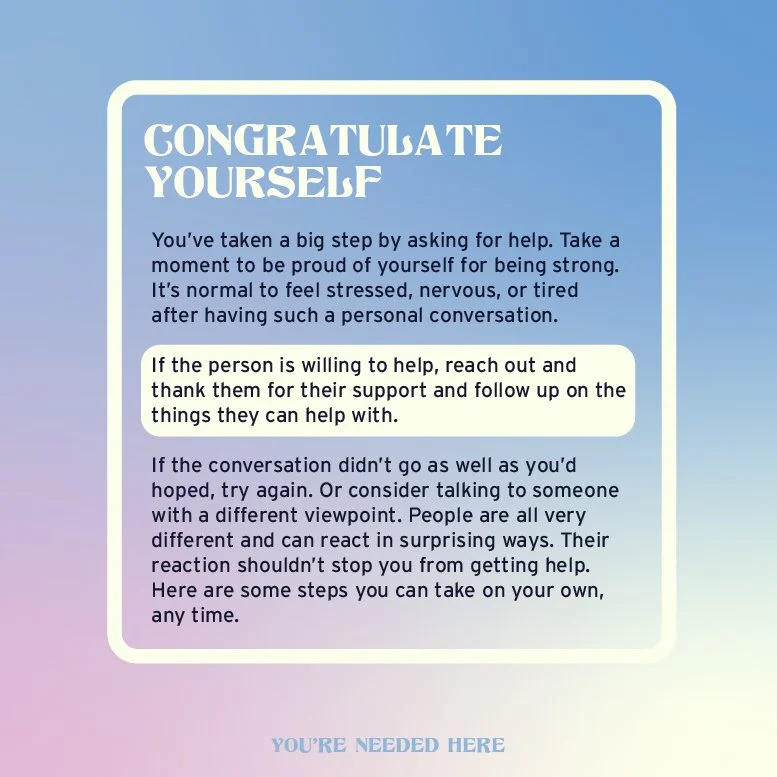
Asking for help can feel vulnerable, uncomfortable, or even scary. But you don’t have to carry everything on your own.
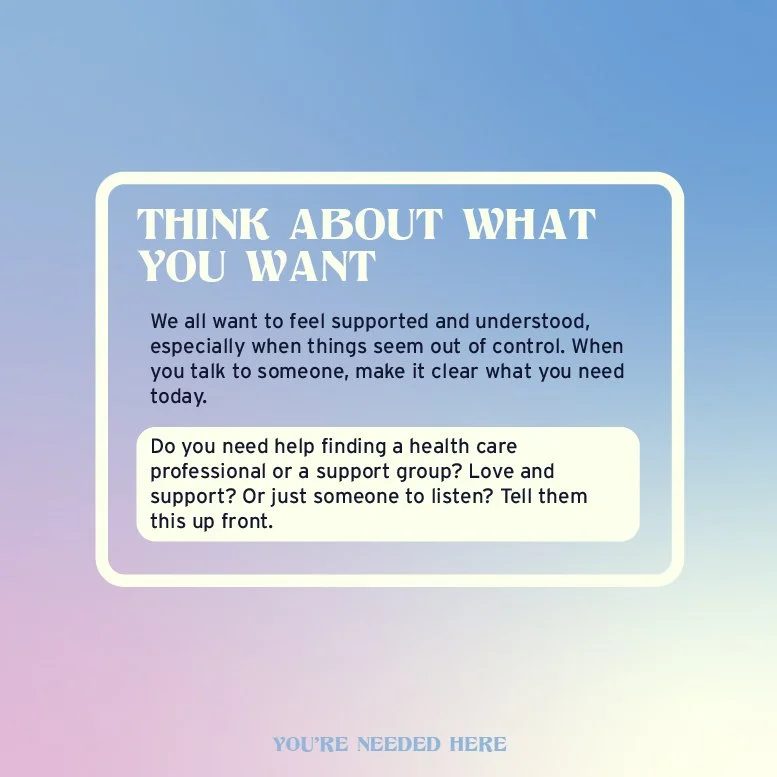
Whether you need someone to listen, help finding professional support, or simply a person you trust to sit with you through a difficult moment, reaching out is an important step toward feeling better.
There’s no perfect way to start the conversation, and you don’t have to have the right words.
Start with what you’re comfortable sharing, be honest about what you need, and give yourself credit for having the courage to speak up.
You deserve to be heard, supported, and cared for.